Pretium Packaging needed a consistent view of production and energy use across a growing manufacturing footprint. Its Guidewheel case study describes how it connected operating and energy information across more than 25 locations, then used that information in everyday decisions. The useful lesson is the decision process: compare similar work using consistent measurements, identify an opportunity and check the economics before changing equipment or production allocation.

Put energy information inside the operating routine
Plant-level utility totals show the cost after it has been incurred. Pretium wanted more detail about individual machines and ancillary equipment so its teams could understand where energy was being used and where an improvement might help. Bringing those measurements into the platform used for daily operations made them easier to use in production discussions.
This connects two questions. Is the machine being used effectively, and how much energy is required for the useful output it produces? Runtime, production and energy measurements have different inputs. Agree the measurement method before comparing machines or plants.
Compare energy at the machine level
At Pretium's Paris, Illinois plant, the team compared similar machine models to investigate the cost of producing bottles. In the case-study example, producing the same quantity on a two-cavity mold machine would cost nearly three times as much in energy as on an eight-cavity machine. That result belongs to the equipment and comparison described in the story. It does not establish that larger machines are always more efficient.
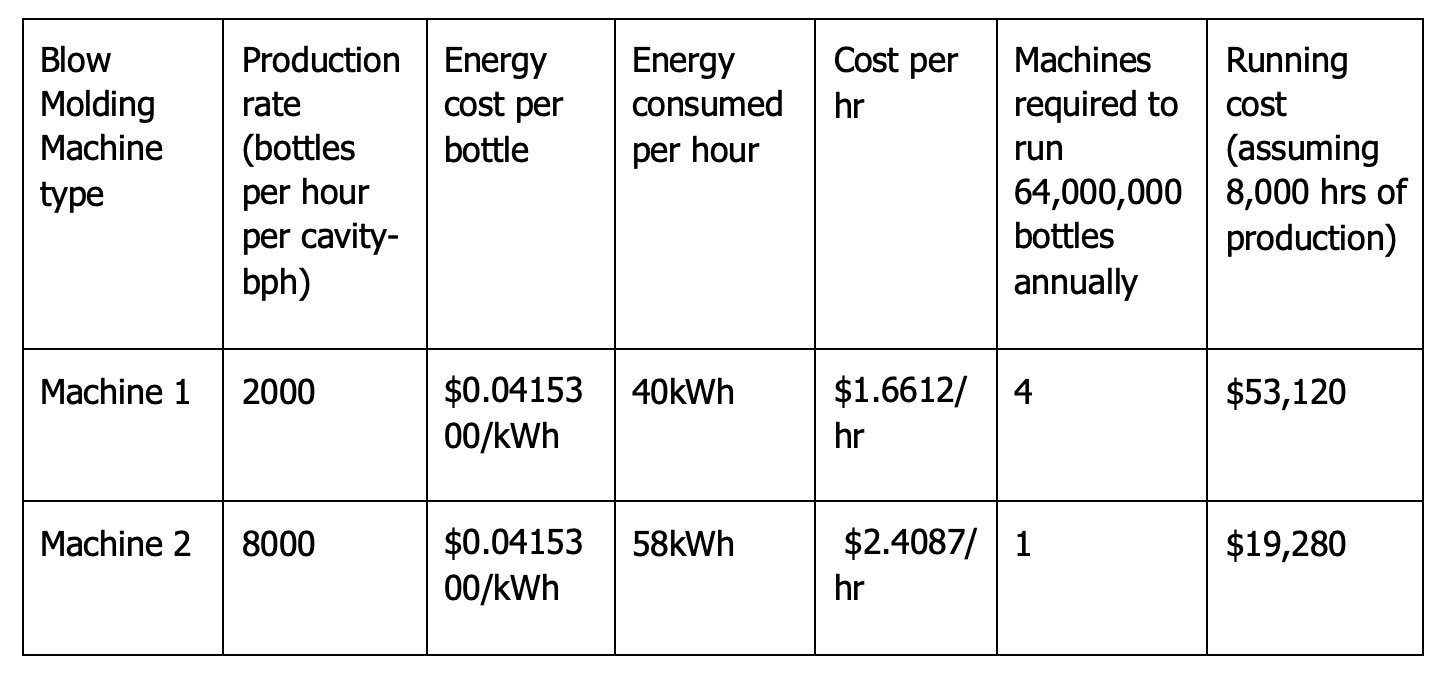
The team could obtain the energy information for the comparison in under three minutes. Ready access mattered because it made the analysis practical within the normal operating routine. The decision still needed equivalent production quantities, appropriate energy measurements and the cost assumptions for those machines.
Use a consistent record across plants
Pretium's case study describes using a shared view to compare facilities and exchange practices. Consistency makes those comparisons useful. Each plant needs compatible definitions for runtime, planned time, production quantity and energy per unit. Differences in product, materials, equipment and shift pattern also need to remain visible.
For a growing manufacturer, that record can support decisions about where to run work and which investments deserve a closer look. It also gives the team a way to revisit a decision after implementation instead of treating the initial estimate as the final result.
Apply the method to your operation
- Choose a production or energy decision with a named owner.
- Define the machine, product and measurement period.
- Validate the state, production and energy inputs required for the comparison.
- Compare equivalent output under the relevant operating conditions.
- Test the proposed change and review the result against the baseline.
Guidewheel's practical operating platform combines machine information with AI-powered software and manufacturing expertise to help teams prioritize improvement. Current sensing can establish operating context without an initial PLC connection; energy and production analysis needs the appropriate additional measurements and definitions. Scope the installation, signals and daily team routine for your equipment.
Read Pretium's full case study or talk to the Guidewheel team about a decision at your plant.
Watch this Guidewheel webinar on real-time machine visibility, understanding downtime and practical ways to use operating data.