No items found.
blog
Bottleneck analysis for manufacturing: find and fix your process constraint
By: Guidewheel
Updated:
May 4, 2026
9 min read
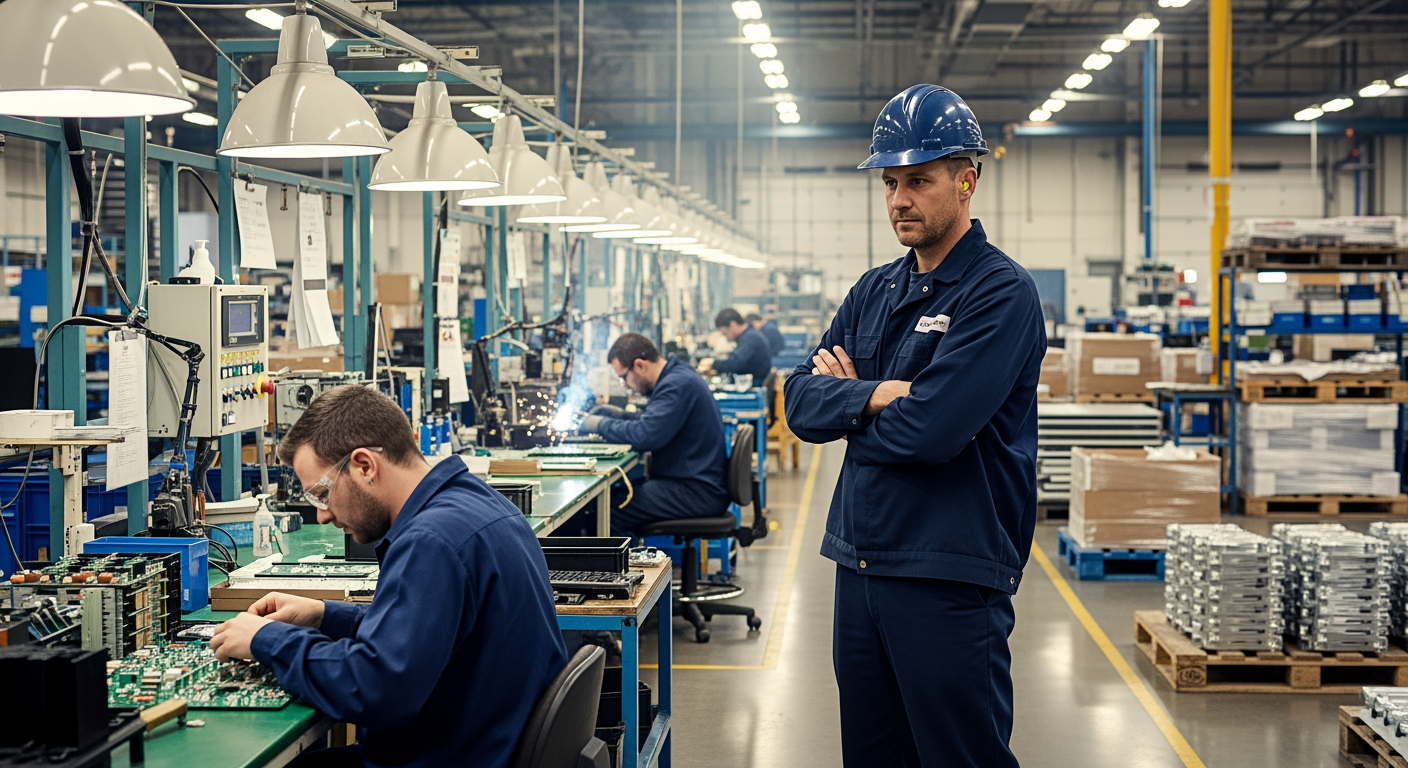
Every plant has a constraint hiding in plain sight.
Maybe it's the machine your team assumes is "just slow." Maybe it's a packaging line that jams twelve times a shift while operators shrug it off as normal.
The frustrating part: most plants operate at 65–75% actual utilization compared to their theoretical capacity, yet teams can't pinpoint exactly where time disappears. That gap between what your equipment could produce and what it does produce is your bottleneck, and finding it is the single highest-leverage move you can make for throughput.
This guide walks through how to identify your real process constraint using machine data, which metrics actually matter, and how to fix what you find, without launching a massive IT project.
Key terms worth knowing before we dig in
If your team uses these terms loosely (most do), here's how they apply to bottleneck analysis:
Term |
Plain-English definition |
Why it matters for bottlenecks |
|---|---|---|
OEE (Overall Equipment Effectiveness) |
Availability × Performance × Quality, expressed as a percentage |
Tells you how much capacity you're losing, but not where |
Utilization % |
Actual production time divided by available time |
The machine with the highest utilization is usually your constraint |
MTTR (Mean Time to Repair) |
Average minutes from stop detection to restart |
Long MTTR on one machine can starve or block the entire line |
Cycle time adherence |
Actual cycle time compared to planned cycle time |
Drift here signals tool wear, process instability, or operator skill gaps |
Microstops |
Unplanned stops under 5 minutes |
Rarely logged manually, yet they account for 20–30% of total downtime minutes |
Why your bottleneck is probably not where you think it is
Here's the pattern I see all the time: a plant manager is convinced Machine 7 is the problem. The maintenance team spends weeks focused there.
Meanwhile, the actual constraint sits two stations upstream, quietly jamming eight times a shift for eight minutes each, costing 96 minutes of lost capacity per day that nobody tracks because the stops feel minor.
Bottlenecks are hard to find without production monitoring for a few specific reasons:
They move. A constraint shifts based on product mix, maintenance events, and operator assignments. What limited throughput on Monday may not be the same culprit on Thursday.
Spreadsheets lag. Across Guidewheel's customer base, many plants still rely on Excel-based tracking, which introduces a 6–24 hour delay between a downtime event and when anyone sees it.
Tribal knowledge stays locked in one person's head. Your most experienced operator knows the quirks of every machine — but that insight disappears during shift handoffs or when they retire.
Aggregation hides the truth. Plant-level OEE can look "acceptable" at 70% while individual machines or shifts mask serious losses underneath.
The fastest way to see which line is starving or blocked isn't a weekly report. You need asset-level status across every machine, updated continuously — so you can spot queue buildups and idle time as they happen.
How machine-level data reveals your real constraint
Finding your bottleneck with runtime data follows a straightforward sequence. No complex modeling required.
Step 1: get visibility on all production equipment
You need run/idle/down status across every machine on the line. This is where a lot of teams stall, assuming legacy equipment can't be monitored.
In practice, Guidewheel's FactoryOps platform uses simple clip-on current sensors to read electrical current from any machine, old or new, and connects via cellular when plant Wi-Fi isn't available. Those sensors turn raw current data into run/idle/down status, cycle counts, and performance trends.
Step 2: identify the highest-utilization machine
The machine running closest to 100% of available time is almost always your bottleneck. Everything downstream starves. Everything upstream backs up. Track utilization across all assets for one to two weeks and rank them.
Step 3: validate with stop frequency and cycle time
High utilization alone isn't enough. Cross-reference with:
Stop frequency per shift
Cycle time variance (In Guidewheel's experience, if actual exceeds planned by more than 5–10%, it typically signals process drift worth investigating)
Queue depth upstream and downstream of the suspect machine
✅
When validating your bottleneck, don't rely on utilization alone. Cross-reference utilization rank with stop frequency per shift, cycle time variance (flag anything exceeding planned by more than 5–10%), and queue depth upstream and downstream. This three-factor check prevents your team from chasing the wrong machine and ensures improvement efforts target the true constraint — where even small gains translate directly into recovered throughput.
Step 4: classify downtime by root cause
Not all stops are created equal. Categorize them so your team knows where to focus.

Data from Guidewheel's performance analysis across 14,700+ downtime events and 3,000+ machines shows that while market-driven factors like "No Business/Orders" cause the longest individual interruptions (averaging 318 minutes), the categories your team can actually control tell a different story.
Mechanical breakdowns average 72 minutes per event, maintenance and cleaning average 85 minutes, and operational issues average 81 minutes. These are the categories where focused intervention drives immediate results. (Source: Guidewheel Performance Analysis)
The actionable downtime categories your team controls
Here's where to prioritize, because these fall squarely within your influence:
Downtime category |
Avg duration per event |
Why it's actionable |
|---|---|---|
Mechanical breakdowns |
72 min |
Predictable with condition trending; preventive schedules reduce repeat failures |
Other operational |
81 min |
Often process-related; root cause analysis on top offenders yields quick wins |
Maintenance & cleaning |
85 min |
Standardizing procedures across shifts reduces variability |
Electrical & controls |
107 min |
Anomaly detection flags controller drift before it causes extended stops |
Staffing issues |
197 min |
Cross-training and shift handoff protocols minimize coverage gaps |
The key insight: addressing mechanical breakdowns and operational stops on your constraint machine has a disproportionate impact on total plant throughput. A 25–40% reduction in MTTR on your bottleneck can help you recover capacity that's already there.
Step 5: recheck monthly, because constraints migrate
After you fix Machine 5, the bottleneck will move. Maybe it shifts to Machine 3, or maybe it moves off the floor entirely into scheduling or material supply.
This is exactly what Goldratt's Theory of Constraints predicts: the cycle is identify, exploit, elevate, then repeat. Continuous machine performance monitoring catches the migration before your team wastes weeks focused on the wrong asset.
How to prioritize which machines to improve first
Once you have data flowing, priorities get clearer fast. Rank machines by a simple composite:
Utilization rank (highest utilization = most constrained)
Downtime impact (total lost minutes per week × contribution margin per minute)
Improvability (are the top stop reasons within your control?)
The machine sitting at the top of all three columns is your first target. In many plants, this exercise reveals that 3–5 quick wins in availability can drive an immediate 3–5% OEE improvement without any capital investment.
Unlocking hidden capacity across shifts without adding headcount
Cross-shift performance variance is one of the most under-discussed sources of lost throughput. Guidewheel's analysis across 3,000+ machines shows the same line, running the same product, can show 10–25% utilization differences between shifts. Same machines, same materials, different results.
Real-time production tracking makes these gaps visible and actionable:
Compare utilization, stop frequency, and cycle time adherence by shift
Identify what the top-performing shift does differently (setup routine, response speed, preventive checks)
Standardize that practice across all shifts using documented procedures and operator dashboards
Track the gap weekly until it closes
This is how you recover capacity that's already paid for without adding headcount or buying new equipment.

These cross-industry benchmarks from Guidewheel's analysis of 3,000+ machines show the significant spread in asset utilization across sectors. Household Goods leads at 96% weighted average runtime, while sectors like Industrial Machinery sit at 34% and Plastics & Packaging at 60%.
These benchmarks serve as reference points, recognizing that each facility's product mix, batch sizes, and operational priorities influence what "good" looks like for your specific context. (Source: Guidewheel Performance Analysis)
Start finding your constraint this week
Your plant almost certainly has capacity it isn't using. The question is whether you can see it.
Bottleneck analysis doesn't require perfection. It requires data, a systematic approach, and the willingness to let the numbers guide where your team spends its energy.
Guidewheel's FactoryOps platform makes this practical on the plant floor, with clip-on current sensors that deploy in days, not months. If you're ready to stop guessing and start unlocking your plant's hidden capacity, Book a Demo to see how quickly Guidewheel can help you identify your first bottleneck — starting with your toughest line.
We had our best month of the year, increasing production from 26,000–35,000 cases/month to 46,000 cases in March. I attribute this to Guidewheel. Being able to see downtime data and address downtime reasons directly correlates to higher production.
Michael Palmer, VP of Operations, Direct Pack (Source: Guidewheel's Customer Research)
💡
Frequently asked questions
What is the difference between production monitoring and machine monitoring?
Machine monitoring operates at the asset level, capturing individual machine states (running, idle, stopped), cycle counts, and event timestamps. Production monitoring aggregates that machine data up to the line or plant level, showing throughput, schedule attainment, and work-in-process flow.
Production monitoring depends on machine monitoring as its foundation; you need both layers for effective bottleneck analysis.
How do manufacturers measure machine utilization accurately?
Accurate utilization measurement requires automated data collection from the machine itself, whether through native connectivity, retrofit sensors, or current-sensing devices. Based on Guidewheel's Performance Analysis, manual tracking typically undercounts minor stops by 30–50%, which distorts your true utilization picture.
Automated equipment performance monitoring captures every start, stop, and idle event without relying on operator memory or end-of-shift paperwork.
When should a plant move beyond spreadsheets for production tracking?
If your team spends more time building reports than acting on them, or if shift supervisors find out about problems hours after they happen, spreadsheets have become a bottleneck themselves.
The tipping point typically arrives when you need to compare performance across shifts, lines, or sites, which requires consistent, time-stamped data that manual entry simply can't deliver reliably.
What ROI should a manufacturer expect from production monitoring software?
Based on Guidewheel's Customer Research, many manufacturers see payback within 6–12 months, with first-year benefits in the range of 2–4x the initial investment. The fastest returns come from downtime reduction on constraint machines, where even modest improvements in stop frequency or repair speed translate directly into recovered throughput.
Results vary based on baseline downtime levels, equipment mix, and how quickly teams act on the data.
How does real-time monitoring support preventive and predictive maintenance?
Instead of relying on fixed calendar schedules, maintenance teams can use condition-based data from machine tracking — such as cycle time drift, current draw changes, or pressure trending — to signal when intervention is actually needed. This shifts maintenance from reactive emergency calls to planned, efficient work.
Based on Guidewheel's Customer Research, some facilities report a 20–40% reduction in emergency maintenance costs after implementing condition-based alerting on critical assets.
About the author
Lauren Dunford is the CEO and Co-Founder of Guidewheel, a FactoryOps platform that empowers factories to reach a sustainable peak of performance. A graduate of Stanford, she is a JOURNEY Fellow and World Economic Forum Tech Pioneer. Watch her TED Talk—the future isn't just coded, it's built.