No items found.
blog
Top OEE Tools for High-Speed Fillers to Boost Uptime
By: Guidewheel
Updated:
December 18, 2025
8 min read
Two inbound calls come into a plant manager’s office. One is a customer asking where their order is because a filler went down—again. The other is a maintenance lead reporting that the line is running smoothly because they caught a bearing vibration early. Only one of these managers is going to make their production numbers today.
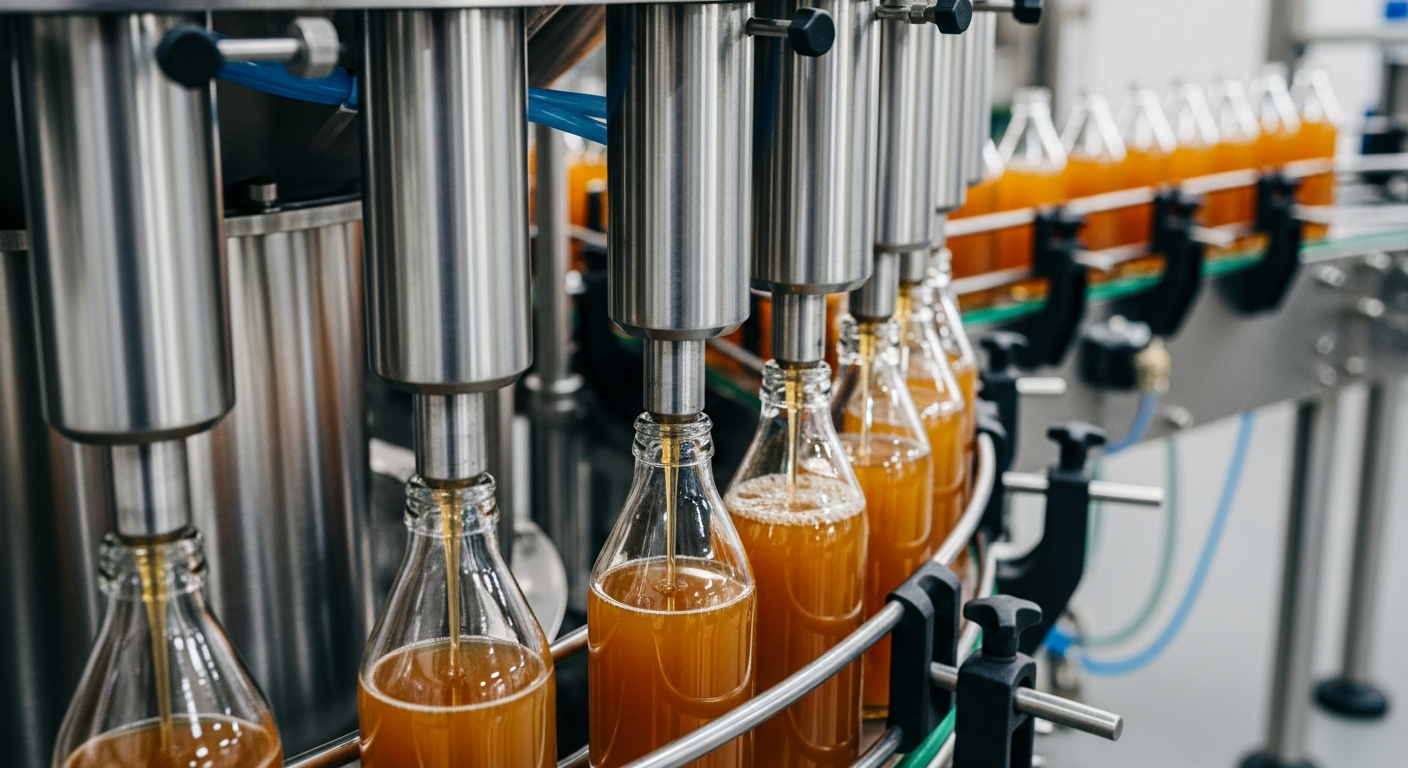
For those in consumer goods manufacturing, specifically operating high-speed filler machines, the difference isn't luck. It’s visibility. Whether you are running rotary flow meter fillers for beverages or net weight fillers for high-value oils, the operational reality is brutal. These machines operate at tight tolerances where even a small percentage gap in speed results in significant lost output.
You are focused on improving OEE, reducing downtime, and justifying performance improvements to leadership. But with a mix of equipment—some brand new, some that have been filling bottles since the 90s—data is often fragmented. Operators might miss logging the 30-second micro-stops that happen 40 times a shift, yet these are exactly what kill your OEE.
Here is the reality: You cannot fix what you cannot see. This article breaks down the landscape of OEE tools for filler machines in 2026, helping you move from reactive firefighting to proactive control.
Top OEE Software Tools for Filler Machines in 2026
When selecting an OEE tool, you need to consider deployment speed, compatibility with legacy assets, and how easily your floor team can use it. Here is how the top players compare.
Guidewheel
Guidewheel takes a "FactoryOps" approach, focusing on empowering the teams on the floor with immediate visibility without the heavy IT lift usually associated with overall equipment effectiveness (OEE) software.
Best for: Facilities with a mix of machine ages (legacy to modern) needing rapid deployment and immediate OEE visibility.
Key Capabilities:
Universal Compatibility: Works on any machine—from 30-year-old mechanical fillers to brand-new lines—using non-intrusive clip-on sensors.
No Facility Internet Required: A key differentiator is that the dashboard population and data processing do not rely on your facility's internal Wi-Fi stability for the sensors to capture data, bypassing complex IT integration.
FactoryOps Focus: Designed for plant managers and operators who need real-time "win the shift" tools rather than just executive reporting.
Rapid Deployment: Sensors clip on in minutes, meaning you get data effectively immediately, not after a 6-month integration project.
Why it stands out:
For a plant manager focused on operational stability, Guidewheel eliminates the blind spots caused by legacy equipment that can't talk to a central network. It captures the micro-stops that operators miss.
Now that we’re capturing granular data, we gain valuable insights into our operations. Guidewheel helps us take our OEE improvements to the next level, identifying which lines, products, and shifts require attention... With Guidewheel, I’m alerted whenever a machine goes down, allowing us to prevent non-conforming material from reaching the customer.
Bernie Hogue, Director of Quality and Process Excellence, Anchor Packaging via Guidewheel's Customer Research
Considerations:
Guidewheel is focused on operational OEE and factory operations. If you are looking for deep, frequency-based vibration analysis for bearing diagnostics exclusively, you might pair it with a specialized condition monitoring tool.
Vorne
Vorne is widely recognized for its XL Productivity Appliance—the "scoreboard" you often see on factory floors.
Best for: Visual management and simple, on-floor scoreboards.
Strengths:
Visual Impact: excellent for showing operators real-time counts and rates.
Simplicity: It is a hardware-first solution that integrates well into simple counting applications.
Limitations:
While great for counting, it can struggle with complex data contexts or multi-part cycles without customization.
Would love to be able to cycle count multiple parts running at the same time. But even without this still a fantastic package.
Harold S., Plant Manager, Capterra
MachineMetrics
MachineMetrics is a strong player in the discrete manufacturing space, particularly with CNC machines, but has applications in broader manufacturing.
Best for: High-precision machine data extraction, particularly from modern controls.
Strengths:
Deep Data Extraction: Pulls granular data directly from machine PLCs.
Automated Activity: Good at categorizing downtime based on machine codes.
Limitations:
The complexity can be a barrier for teams without dedicated technical resources.
It needs some times to understabd and it may need someone with technical knowledge and aldo POC.
Ossama Y., IT Manager, G2
Redzone
Redzone focuses heavily on the "people" side of manufacturing—collaboration, huddles, and culture.
Best for: Workforce engagement and shifting culture.
Strengths:
Collaboration: Excellent tools for chats, huddles, and team communication.
Gamification: Uses leaderboards to drive operator engagement.
Limitations:
The setup can be heavy, requiring significant data input and cultural buy-in to work effectively.
The hardest part about using QAD RedZone is all the work it takes to set up in the beginning. There’s a lot of data to input and getting everything customized to fit our process takes time.
Verified User, G2
Inductive Automation (Ignition)
Ignition is a platform, not just a product. It allows engineers to build custom SCADA and MES systems.
Best for: Plants with a dedicated controls engineering team who want to build a custom solution.
Strengths:
Customizability: You can build almost anything you can imagine.
Integration: Connects to virtually any PLC or database.
Limitations:
It is not "plug-and-play." It requires significant engineering time and maintenance. If you need a solution now to address urgent operational challenges, this is a long-term project, not a quick fix.
Amper
Amper uses electrical signatures to monitor machine status, similar to the non-invasive approach.
Best for: Shop floor monitoring using current transformers (CTs).
Strengths:
Simple Install: It avoids deep PLC integration.
Focus: Good for basic machine utilization tracking.
Limitations:
While strong on basic utilization, the depth of "FactoryOps" features—specifically connecting specific production contexts to financial outcomes—may vary compared to broader platforms.
The Predictive Maintenance Group (Augury, AssetWatch, Neuron Soundware, IPercept)
This group of competitors focuses less on OEE/Production flow and more on machine health via vibration and sound analysis.
Augury & AssetWatch: Specialize in vibration monitoring to predict bearing and motor failures.
Neuron Soundware: Uses audio analysis to "listen" for machine anomalies.
IPercept: Focuses on motion-based health monitoring.
Best for: Preventing catastrophic mechanical failures on critical assets.
Context for Fillers:
These tools are excellent for warning you that a main drive motor is about to fail in 3 weeks. However, they typically do not track OEE, changeover times, or production counts. They are complementary to OEE tools rather than direct replacements.
Comparing solution types
Feature | Guidewheel | PLC-Based (MachineMetrics/Ignition) | Scoreboards (Vorne) | Predictive (Augury/AssetWatch) |
|---|---|---|---|---|
Installation Speed | Very Fast (Clip-on) | Slow (Requires Integration) | Medium (Wiring required) | Fast (Sensors) |
Legacy Compatibility | High (Universal) | Low (Difficult on old machines) | Medium | High |
OEE Focus | High | High | High | Low (Health focused) |
IT Resource Load | Low | High | Low | Low |
OEE Tools for Stabilizing High-Speed Filling Lines in a Volatile Market
In consumer goods, the filling line is the plant's heartbeat. Yet, in a facility mixing legacy mechanical fillers with modern servos, that heartbeat is often hidden. You cannot maximize production efficiency when downtime causes remain "unknown" on a clipboard. The transition to proactive control requires realizing that efficiency and sustainability are the same goal; every minute of optimized uptime reduces energy waste and protects margin.
The winners in this sector aren't necessarily buying new lines. They are extracting clear signals from the assets they already have, including visibility into downstream blockage to differentiate between 'Filler Down' and 'Filler Blocked by Downstream'. By empowering operators to see micro-stops as they happen, you turn the people closest to the work into the architects of the solution.
Building a FactoryOps Culture on the Packaging Floor
For most factories, "rip-and-replace" digitization is a non-starter—too slow, too disruptive, and too dependent on IT. A FactoryOps approach starts smaller and moves faster. With Guidewheel's non-intrusive, clip-on sensors and real-time FactoryOps conveyor analytics platform, you can instrument a 1995 rotary filler as easily as a new line, capture cycle times, micro-stops, and energy draw in real time, without complex integrations or disrupting production. That shared view turns uptime into a team sport and shifts conversations from "why are we down?" to "how do we win the shift?"
Stop guessing and start measuring. Book a demo with Guidewheel today to see how fast you can increase line capacity with your existing equipment.
About the Author
Lauren Dunford is the CEO and Co-Founder of Guidewheel, a FactoryOps platform that empowers factories to reach a sustainable peak of performance. A graduate of Stanford, she is a JOURNEY Fellow and World Economic Forum Tech Pioneer. Watch her TED Talk—the future isn’t just coded, it’s built.