No items found.
blog
Chasing Uptime: Top Monitoring Platforms for Stamping Presses Compared
By: Guidewheel
Updated:
December 18, 2025
9 min read
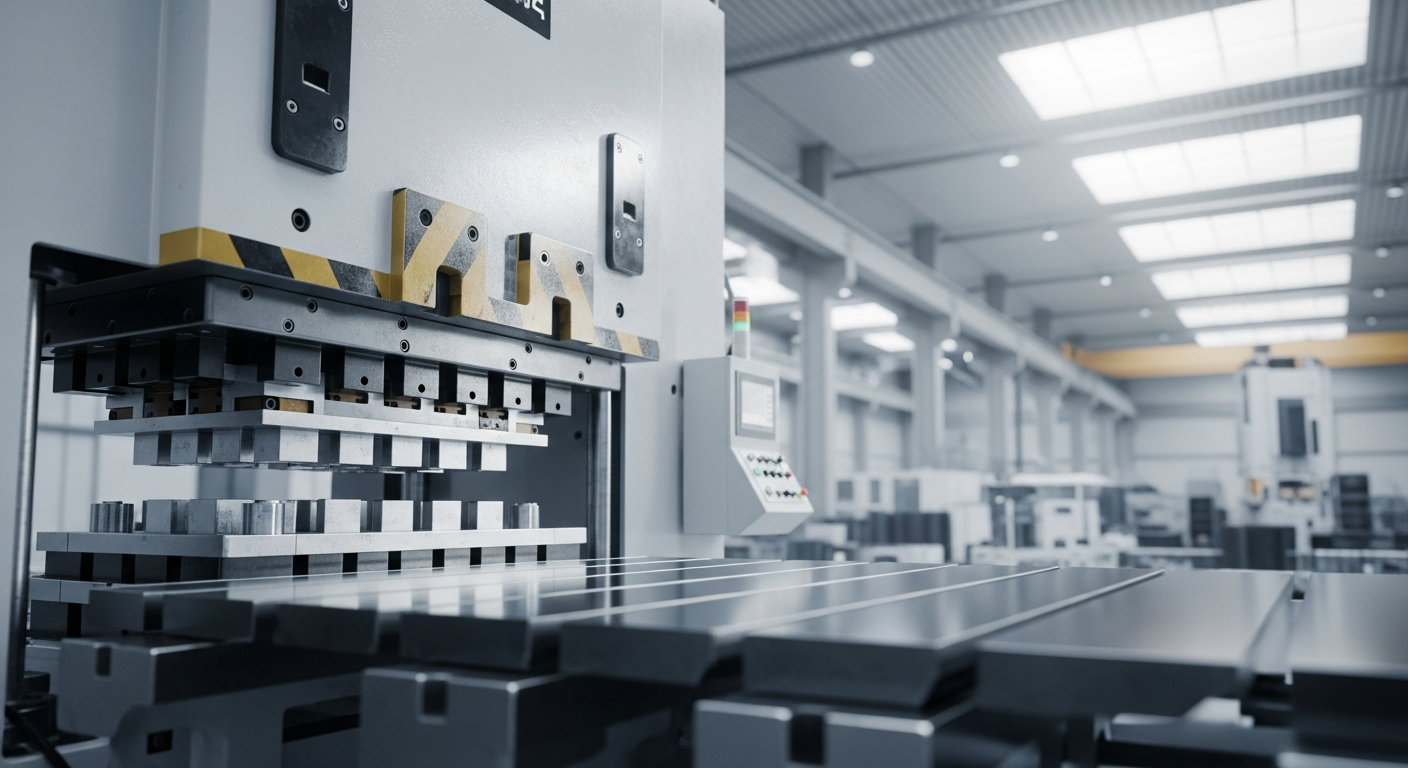
Here's the reality: running a stamping operation without real-time metal stamping machine monitoring means you're flying blind. If you're the plant manager on the floor—constantly pulled into reactive troubleshooting, trying to balance production schedules, and fielding questions from leadership about why output fell short—you already know the problem. Your decisions are built on manual logs and stale data.
This is the challenge of operating in a reactive cycle. You've lived it. A press stops, and you have no idea whether it's the fifth micro-stop of the shift or a major failure until you're physically standing there. You're running expensive, sophisticated stamping equipment, but the information driving your choices is often hours—sometimes days—behind reality.
The financial toll of this blind spot is massive. Industry research shows unplanned downtime drains manufacturers of roughly $50 billion each year (Source: Sdcexec). In stamping facilities, the damage goes beyond catastrophic breakdowns. The real killer is what you can't see: micro-stops, sluggish cycle times, and drawn-out changeovers that quietly drain profit margin.
This article skips the buzzwords around "Industry 5.0" and "AI transformation" to focus on proven, scalable solutions for metal stamping machine monitoring. We're evaluating tools that deliver results on the shop floor—not experimental technology.
The Contenders: Metal Stamping Machine Monitoring Solutions
When evaluating the current and near-future landscape of machine monitoring software for metal forming, the market splits into distinct categories: the pragmatic "FactoryOps" platforms, the hardware-heavy legacy players, and the niche predictive maintenance specialists.
Here is how the real contenders stack up for the steel and metals industry.
1. Guidewheel: The Pragmatic "FactoryOps" Choice
Guidewheel has carved out a unique position by rejecting the complexity of traditional MES implementations. Instead of months of integration, it focuses on "FactoryOps"—a philosophy that prioritizes immediate visibility and operator empowerment.
The Approach: Guidewheel uses a clip-on sensor technology that bypasses the PLC entirely. This is critical for stamping shops running a mix of brand-new servo presses and decades-old mechanical flywheel presses. Because it doesn't rely on deep integration with the machine's controls, it works on any equipment.
Why it stands out for Stamping:
Universal Compatibility: It works on every asset, from the stamping press to the decoiler, regardless of age.
No Facility Internet Required: Unlike competitors that demand robust Wi-Fi on the factory floor, Guidewheel's hubs can operate independently, pushing data to the cloud without stressing your internal IT network.
Rapid Deployment: You can literally clip sensors on and see data the same day.
The Immediate Value: For the plant manager needing to justify investment, Guidewheel offers the fastest time-to-value. It turns the lights on immediately, exposing micro-stops and changeover inefficiencies without a six-month IT project.
Limitations: The trade-off for simplicity is depth. If you need millisecond-level signal analysis from the PLC or want to build custom logic into your machine controls, Guidewheel's non-intrusive approach won't give you that level of integration. It's designed for visibility and action, not for replacing your control system.
Guidewheel has been instrumental since I have taken over the Maintenance Department at RAPAC. Our biggest strides have been from downtime capture and using the system to be a leading indicator for processing issues. My team uses the system and the information it provides daily to determine root causes and how to prevent excess downtime.
Steven Cummings, Maintenance Manager, Rapac via Guidewheel's Customer Research
2. MachineMetrics: The High-Frequency Data Specialist
MachineMetrics is a strong contender, particularly known for its ability to capture high-frequency data directly from machine controls.
Strengths: They excel at deep integration with modern CNCs and PLCs. If your stamping floor is comprised entirely of modern equipment with accessible ethernet ports, MachineMetrics provides granular data that can be useful for detailed engineering analysis.
Limitations: The challenge in steel and metals is often the legacy equipment. Integrating MachineMetrics with older presses often requires more complex I/O adapters or PLC work compared to non-intrusive solutions. For the hands-on plant manager, this can mean a longer wait before getting actionable data.
3. Vorne: The Visual Scoreboard Standard
Vorne is a familiar name in manufacturing, famous for its XL Productivity Appliance—the red and green LED scoreboards seen in many shops.
Strengths: Vorne is excellent at simple, visual motivation. Operators look up, see the count, and know if they are winning or losing the shift.
Limitations: It is primarily a hardware-first solution. While they offer software, the data can sometimes become siloed within the local network. Furthermore, the cost structure often involves purchasing hardware for every single asset.
4. Redzone: The Culture and Social Play
Redzone focuses heavily on the "social" aspect of manufacturing, adding chat features and huddle modules to the monitoring layer.
Strengths: They are effective at driving operator engagement and gamification. For plants with significant cultural challenges, Redzone offers a structured way to improve communication.
Limitations: The implementation is heavy. It requires iPads, extensive training, and a significant change management effort. For a plant manager focused on machine uptime and technical throughput, the social features can sometimes feel like distractions from the core OEE data.
Cost of implementation was high. Installation of sensors and associated network, purchase of hardware inc. TVs, Apple devices.
Jagdeep P., Head of HSEQ, Capterra
5. Inductive Automation (Ignition): The Engineer's Toolbox
Ignition by Inductive Automation is a SCADA platform that allows for infinite customization.
Strengths: If you have a team of controls engineers and want to build a bespoke press monitoring platform from scratch, Ignition is the industry standard. You can build anything.
Limitations: You have to build it. For the hands-on plant manager juggling production schedules and throughput targets, Ignition often represents a distraction. You aren't in the business of software development; you are in the business of stamping metal. Maintaining a custom Ignition deployment often requires a dedicated full-time engineer.
6. The Predictive Maintenance Specialists: Augury, AssetWatch, Neuron Soundware, IPercept
This group (Augury, AssetWatch, Neuron Soundware, IPercept) focuses specifically on machine health rather than production throughput.
The Focus: These platforms use advanced vibration and acoustic sensors to detect bearing failures or gear wear months in advance.
The Reality for Stamping: While valuable, these are often "second-step" technologies. While predictive maintenance protects the asset from catastrophic failure, real-time production monitoring protects the daily profit margin. These solutions generally do not provide the OEE, cycle counting, and production visibility that a plant manager needs to run the daily shift. They are insurance policies, not operational steering wheels.
7. Amper: The Electrical Signature Monitor
Amper uses current transformers (CTs) to monitor machine state based on electrical draw.
Strengths: It is relatively easy to install.
Limitations: As with any non-intrusive CT-based approach, electrical signature analysis can sometimes struggle to differentiate between complex states in a stamping press (e.g., differentiating between a setup jog and a production cycle) without additional context that other sensors might provide.
Metal Stamping Monitoring Software Feature Comparison Matrix
When you strip away the marketing, here is how the deployment realities compare for a steel and metals facility.
Feature | Guidewheel | MachineMetrics | Vorne | Redzone | Ignition | Predictive Specialists |
|---|---|---|---|---|---|---|
Primary Focus | FactoryOps & OEE | High-Freq Data | Visual Scoreboard | Culture/Social | Custom SCADA | Machine Health |
Installation | Non-intrusive (Clip-on) | PLC Integration | Hardware Wired | iPads/Sensors | Engineering Project | Vibration Sensors |
Legacy Compatible | High | Low/Medium | Medium | Medium | Low | High |
Deployment Speed | Days | Weeks/Months | Weeks | Months | Months | Weeks |
IT Requirement | Low (No Facility Internet) | High | Medium | High | Very High | Medium |
The Future of Stamping Press Monitoring Is Measured in Milliseconds
In the tight-margin world of steel and metals, profitability is hidden in the milliseconds lost during every stroke. Whether you manage high-speed progressive dies or heavy transfer lines, the real killers are the micro-stops and slow cycles that manual logs simply can't catch. In an industry where material costs are fixed, your only lever for profitability is the efficiency of the asset itself.
The goal is no longer just keeping the press running; it is about precision. You need to know immediately if a press is lagging due to a feed jam or if changeover times are creeping up. This level of visibility transforms maintenance from a reactive fire drill into a competitive advantage. The technology for metal fabrication machine monitoring isn't a luxury anymore—it is the fundamental requirement for any stamping operation intended to last.
Stop Running Your Presses Blind
If you’re managing a mix of mechanical and servo presses, decoilers, and shears, you need one clear view of what’s running, what’s down, and why. Real-time visibility across the whole line lets you spot chronic micro-stops, unstable jobs, and changeover losses while the shift is still in motion—not at the end of the week.
Guidewheel’s FactoryOps platform gives your team that live window into uptime, downtime reasons, OEE, and throughput across every connected asset. Scoreboards and simple dashboards keep operators and leaders on the same page, so you can act fast instead of digging for answers. Don’t let another shift pass in the dark. Book a demo to see it in action on your stamping lines.
About the Author
Lauren Dunford is the CEO and Co-Founder of Guidewheel, a FactoryOps platform that empowers factories to reach a sustainable peak of performance. A graduate of Stanford, she is a JOURNEY Fellow and World Economic Forum Tech Pioneer. Watch her TED Talk—the future isn’t just coded, it’s built.