No items found.
blog
Top Extrusion Monitoring Solutions for Packaging and Consumer Goods Plants
By: Guidewheel
Updated:
December 18, 2025
8 min read
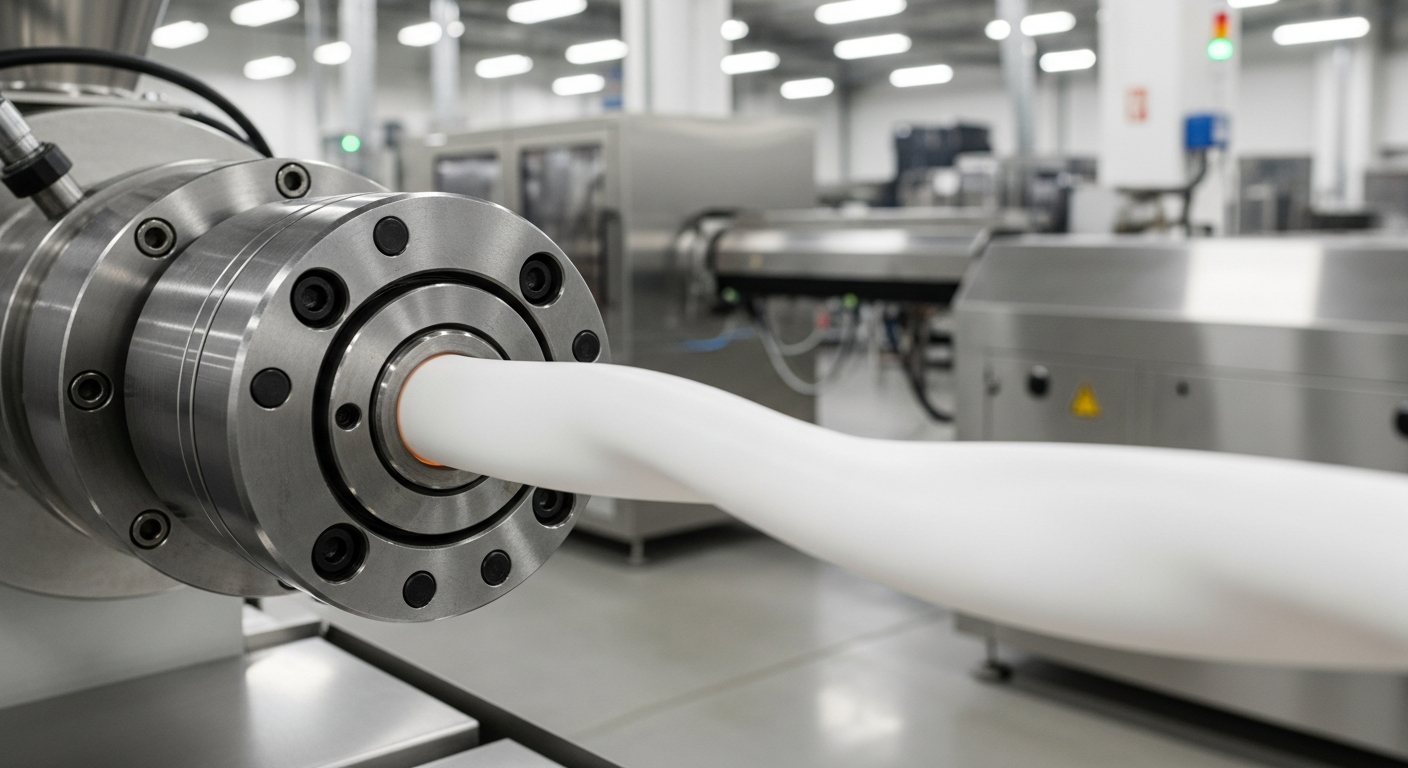
For any manager of a consumer goods & packaging extrusion plant, the goal is a predictable, high-performing floor. But in a high-volume environment, hidden issues derail shifts. An unexpected stop on Line 3 or a maintenance delay doesn't just stop production; it creates scrap, forces long purge cycles, and puts delivery schedules at risk.
In 2026, the difference between a plant that struggles with variability and a high-performing one comes down to visibility. You can’t fix what you can’t see, and manual logs or whiteboards don't cut it when you’re trying to squeeze every ounce of throughput out of your extruders. The "rip-and-replace" mentality of massive digitization projects often fails here. What works is pragmatic, real time production monitoring that empowers operators to act.
This article cuts through the noise to compare the extrusion monitoring systems plants trust today. We’ll look at how they handle the specific challenges of consumer goods extrusion—from micro-stops to resin changeovers—and help you decide which approach fits your reality.
Comparing the Landscape: 5 Categories of Extrusion Monitoring Systems and Factory Monitoring Solutions
When looking for the best extrusion monitoring systems for consumer goods, you’ll generally find four types of solutions. We’ll break down the top players in each.
Category | Best For | Key Players |
|---|---|---|
FactoryOps (Guidewheel) | Rapid deployment, mixed fleets (old/new), and empowering teams without IT headaches. | Guidewheel |
Hardware-Centric | Single-machine visualization and simple counting. | Vorne |
Mid-Market / Integrated | Deep integration with ERP/MES, often requiring more setup. | MachineMetrics, Redzone, Amper |
AI & Vibration Niche | Deep predictive maintenance for critical rotating assets (motors/gearboxes). | Augury, Neuron Soundware, Asset Watch, IPercept |
Enterprise SCADA | Full custom control system integration. | Inductive Automation |
Guidewheel: The FactoryOps Conveyor Monitoring Solution
Best for: High-mix facilities needing immediate visibility across all equipment types without IT complexity.
Guidewheel takes a "FactoryOps" approach—treating the factory as a system that needs to be managed by people, not just machines. It's built for the plant manager who wants to move from reactive problem-solving to proactive optimization.
Why Guidewheel stands out:
Universal Compatibility: Whether you have a 30-year-old Davis-Standard extruder or a brand-new Reifenhäuser line, Guidewheel works. It uses non-intrusive clip-on sensors that capture the electrical “heartbeat” of the machine, and algorithms interpret the power draw to determine the machine's operational state—run, idle, or down—providing a clear picture of asset utilization.
No Facility Internet Required: This is a massive differentiator. Guidewheel hubs don't require a connection to your facility's internet to populate dashboards. This bypasses the usual IT security nightmares and firewall battles, meaning you can be up and running quickly.
Rapid Deployment: Because it doesn't require complex PLC integration, you get a plug-and-play extrusion monitoring system. Sensors clip on, and the system starts learning immediately.
Operator-First Design: The interface is designed for the floor, not just the back office. It empowers operators to tag downtime reasons quickly, turning them into active participants in improvement.
Real-World Impact:
According to a Rapac case study, the team achieved an 18% increase in uptime on monitored machines within weeks of installation. By spotting micro-stoppages and trending power data, they moved from reactive repairs to proactive problem-solving.
Limitations:
While Guidewheel excels at operational visibility and OEE tracking, it's not a deep vibration analysis tool. If you need detailed bearing fault diagnostics or acoustic monitoring, you'll want to pair it with a specialized predictive maintenance solution for those specific assets.
MachineMetrics & Redzone: The Mid-Market Contenders
Best for: Facilities looking for deep shop floor integration or workforce collaboration tools.
MachineMetrics is a strong player in the extrusion monitoring software space, known for its ability to pull data directly from modern PLC and temperature control systems.
Strengths: High-frequency data capture and good visualization for modern machines.
Limitations: It can be complex to deploy on legacy equipment that lacks modern ports. User feedback highlights cost and learning curve as barriers for some teams.
Redzone focuses heavily on the "people" side—social collaboration and workforce productivity.
Strengths: Excellent for gamification and team communication.
Limitations: It can be rigid. In dynamic extrusion environments where lines change frequently, this rigidity can be a pain point.
Our production lines usually don't remain the same and the sensor configuration becomes inadequate.
Jaime D., Operations Project Manager, Capterra.
Amper is another option in this space, utilizing machine electrical monitoring similar to Guidewheel, offering a simpler alternative to deep PLC integration for shops that need basic utilization tracking.
Vorne: The Hardware Specialist
Best for: Simple, visual production counting on single lines.
Vorne is famous for its XL productivity appliances—the physical LED scoreboards you see above lines.
Strengths: Very tangible. Operators look up and see the score. It handles basic OEE well.
Limitations: It is hardware-centric. Customizing the digital dashboards for deeper analysis can be limited compared to modern cloud-native software.
The customizablilty of the main dashboards.
Gianna A., Engineering, Capterra.
The Deep Tech & AI Niche: Augury, Neuron, IPercept, Asset Watch
Best for: Extrusion machine health monitoring focusing specifically on vibration and predictive maintenance of critical motors.
Tools like Augury, Neuron Soundware, IPercept, and Asset Watch sit in a specialized category. They don't typically manage your production schedule or OEE; instead, they listen to your machines.
Focus: They use advanced vibration sensors and microphones to detect bearing wear or gearbox faults months in advance.
Use Case: Ideal for critical assets like the main extruder gearbox and thrust bearings, where failure can shut down the line for weeks.
Trade-off: They are often "point solutions." You might know your bearing is failing, but you won't necessarily know if your changeovers are inefficient or why your throughput dropped last Tuesday.
Inductive Automation (Ignition)
Inductive Automation (Ignition) is the "do-it-yourself" enterprise giant. If you have a team of controls engineers and want to build a custom SCADA system from scratch, this is the sandbox. It’s powerful but requires significant internal resources to build and maintain.
The Shift: From Reactive Extrusion to Precision Control
In consumer goods & packaging, margins are made in the details. A 2% reduction in scrap or reducing purge and setup times on a co-extrusion line isn't just an efficiency metric; it's the difference between hitting a delivery window and paying expedited freight. The days of running extruders until they break and fixing them on the fly are ending. The most successful plants today aren't necessarily the ones with the newest Reifenhäuser lines, but the ones that have mastered the visibility of their existing fleet.
The "hidden factory" in extrusion is real. It lives in the unrecorded micro-stops while operators clear downstream backups or winder issues, the extended warm-up times that drift into the first shift, and the slow-running lines that nobody noticed were under-speed. Capturing this lost capacity doesn't require a multi-year IT overhaul. It requires a mindset shift toward transparency and a willingness to put data in the hands of the people standing at the die. When operators can see the score, they play to win.
Unlock Your Hidden Capacity Without the IT Nightmare
Traditional production monitoring systems mean long integration projects and IT battles—"rip-and-replace" initiatives extrusion lines don’t have time for. Guidewheel takes a different path. Our FactoryOps platform uses non-intrusive sensors that clip onto the power supply of any vintage of extruder or downstream equipment. There is no complex integration, no facility internet requirement, and no disruption to your production schedule.
You get real-time visibility into run, idle, and down time, changeovers, micro-stops that erode OEE, and lines running below target speed—through scoreboards, operator dashboards, and reports your team can act on. If you are ready to stop guessing and start using live data to focus maintenance, staffing, and improvement work where it matters most, the next step is simple.
About the Author
Lauren Dunford is the CEO and Co-Founder of Guidewheel, a FactoryOps platform that empowers factories to reach a sustainable peak of performance. A graduate of Stanford, she is a JOURNEY Fellow and World Economic Forum Tech Pioneer. Watch her TED Talk—the future isn’t just coded, it’s built.