No items found.
blog
How Slitting Line Downtime Tracking Is Reshaping Steel & Metals Coil Processing Performance in 2026
By: Guidewheel
Updated:
December 19, 2025
9 min read
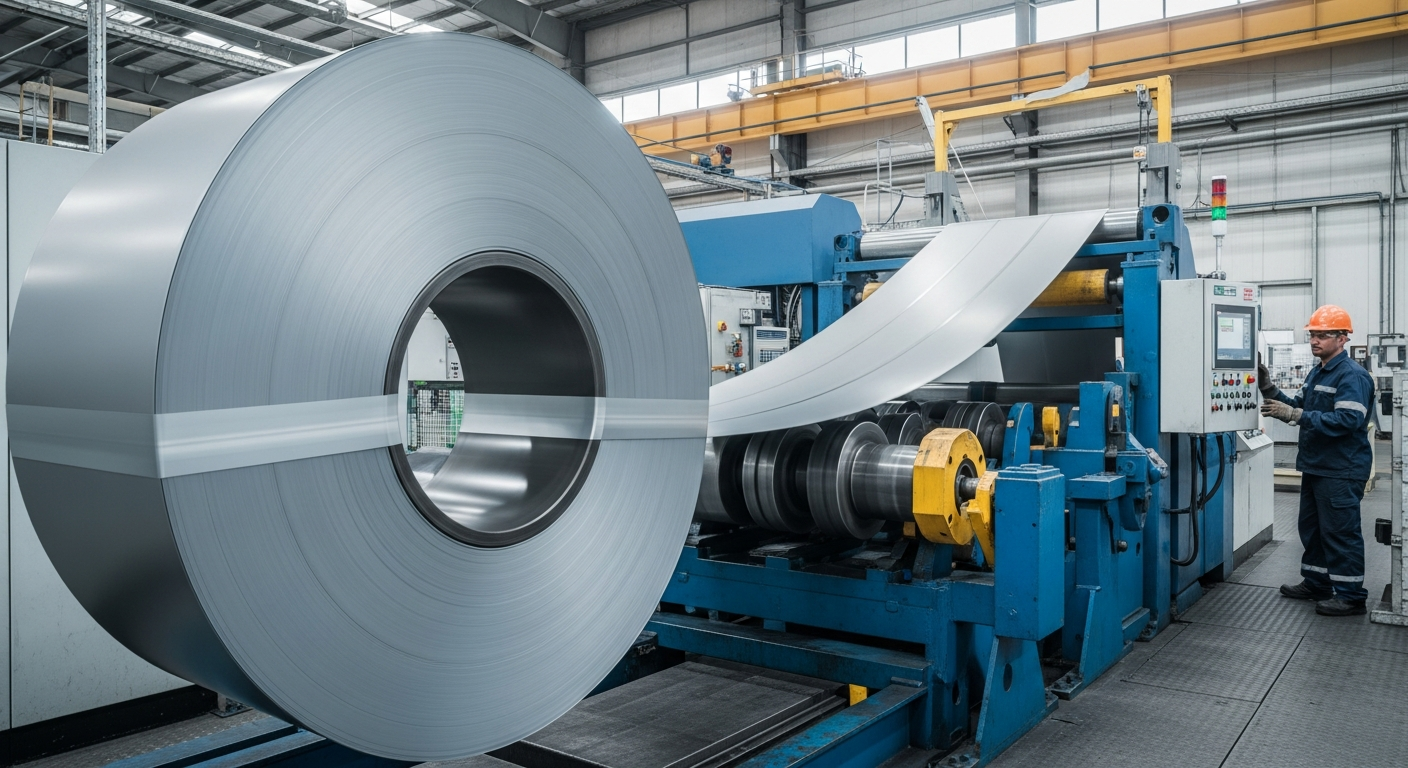
If you’ve walked the floor of a coil processing facility lately, you know the pressure is different in 2026. Margins are tighter, skilled operators are harder to find, and the demand for just-in-time delivery has never been higher. For plant managers and operations directors in Steel & Metals, the challenge isn’t just about cutting metal—it’s about cutting waste from the process.
Slitting lines are often the heartbeat of these service centers and processing plants. When the slitter stops, the cash flow stops. Yet, despite their critical importance, these lines remain some of the most opaque assets in the industry. Many are legacy machines, built like tanks decades ago, but lacking the digital voice to tell you why they aren’t running.
We recently analyzed performance data specifically from the Steel & Metals and Industrial Machinery sectors to understand what is actually happening on the shop floor. The results challenge a lot of assumptions about where productivity is lost. It turns out, the gap between the "average" plant and the "top performers" isn't about faster machines—it's about visibility.
The State of Steel & Metals: Analyzing Recent Performance Data
To get a clear picture of what is happening in coil processing today, we looked at insights based on Guidewheel's sensors over the last few months, between September and November 2025. This analysis covers specific areas within Steel & Metals manufacturing and Industrial Machinery to identify patterns that plant managers can act on.
Sample Sizes: This analysis is based on a dataset covering n=4.2 million machine-minutes across the Industrial Machinery sector.
(Source: Guidewheel Performance Analysis)
The Performance Gap in Slitting Operations
The most striking finding from the recent performance data is the massive variance in how slitting lines are utilized. While we often assume that capital-intensive assets like slitters are running constantly, the data tells a different story.
The median runtime for slitting lines in this dataset is just 12.8%.
However, this number requires context. It doesn't mean the industry is failing; it means the "median" performance includes facilities with high-mix/low-volume runs, frequent setups, and single-shift operations.
The real insight lies in the potential. The top quartile of performers achieve 57.6% runtime. This gap—between 12.8% and 57.6%—represents "hidden factory" capacity. It suggests that without buying a single new machine, many facilities have the potential to quadruple their throughput by optimizing the assets they already have.
How Slitting Line Downtime Tracking Is Reshaping Steel & Metals Coil Processing Performance in 2026

Figure 1: Performance gap analysis showing the significant opportunity in Slitting Line optimization compared to other assets. (Source: Guidewheel Performance Analysis, n=4.2 million machine-minutes)
The Real Drivers of Downtime in 2026
If we want to close the gap between the median (12.8%) and the top performers (57.6%), we have to look at what is stopping the line. The data reveals that while "No Orders" is a massive factor, the actionable opportunities lie in staffing, maintenance, and operational friction.
-
The Market Reality: No Business / Orders (49%)
Nearly half of the recorded downtime falls under "No Business" or "No Orders," with an average duration of over 233 minutes per event.
While this often reflects market conditions or shift scheduling (e.g., running one shift instead of three), it is crucial to track this separately from operational downtime. If you lump "No Work" in with "Broken Machine," you skew your OEE calculations and hide the true efficiency of your maintenance and operations teams.
-
The Labor Challenge: Staffing Issues (19.5%)
This is the single most actionable efficiency lever for 2026. Roughly 20% of downtime is attributed to staffing issues—specifically "No Operator" or availability gaps.
- Average Duration: 143 minutes per event.
- The Insight: The machines are ready, but the people aren't. This doesn't necessarily mean you need more people; it often means better visibility is needed into where people are deployed.
- Remote Monitoring Impact: In an era of skilled labor shortages, remote monitoring tools allow a single supervisor to monitor multiple lines from a tablet, reducing the "walking waste" and ensuring that when an operator is needed at a specific slitter, they are alerted immediately.
-
Operational Friction: Maintenance & Breakdowns
The data shows a fascinating distinction between planned maintenance and unplanned breakdowns.
- Maintenance & Cleaning (7.6%): These events average 70 minutes.
- Mechanical Breakdowns (6.8%): These events average 35 minutes.
(Source: Guidewheel Performance Analysis)
The data indicates that unplanned breakdowns happen, but they are often fixed relatively quickly (35 mins). However, the cumulative effect of these short stops disrupts flow. More importantly, the "Lunch/Break" category was identified as a primary loss driver for slitters specifically. This suggests that in many facilities, slitting lines are fully stopped during human breaks, rather than utilizing staggered shifts or relief operators to keep these high-value assets running.
Solutions: Turning Data into Uptime
The gap between the 12.8% median and the 57.6% top performers is largely a visibility gap. You cannot fix a 143-minute staffing delay if you don't know it's happening until the shift report comes out the next morning.
Why Real-Time Monitoring Matters for Slitters
Legacy slitting lines are difficult to monitor because they often lack modern PLCs. They are mechanical workhorses. This is where modern "FactoryOps" technology comes in.
By using simple clip-on current sensors, steel and metals processors can bypass the need for complex IT integrations. These sensors detect the magnetic field generated by the power cable to determine if the slitter is cutting metal, idling, or off.
Addressing the Specific Data Points
Based on the performance analysis, here is how monitoring directly addresses the identified issues:
- Solving the "Lunch/Break" Loss: Real-time dashboards make it obvious when a machine is left idle for 45 minutes during a 30-minute break. This visibility encourages the implementation of staggered breaks, potentially recovering 5-10% of capacity immediately.
- Reducing Staffing Gaps: If a machine sits idle for 15 minutes waiting for an operator, an automated alert can be sent to a floor supervisor or a group chat. This reduces the 143-minute average duration for staffing delays by triggering a faster response.
- Optimizing Maintenance: By tracking the actual runtime hours rather than calendar days, maintenance teams can switch to usage-based preventive maintenance. This stops over-maintenance (wasting time) and under-maintenance (causing the 6.8% breakdown rate).
Guidewheel: A FactoryOps Approach
Guidewheel is designed specifically for this reality. It works on any machine—from a brand-new loop line to a 30-year-old slitter—using non-invasive sensors.
- Universal Compatibility: Whether you are running a vintage PAXSON slitter or a new Braner line, the clip-on sensors work the same way.
- Connectivity: It operates on cellular networks, meaning you don't need to fight with IT to get a secure port on the company Wi-Fi (though Wi-Fi is an option).
- The "FactoryOps" Difference: It’s not just about collecting data; it’s about empowering the operator. The system provides a "Scoreboard" that shows the team exactly where they stand against their goals in real-time.
Crucially, Guidewheel’s proprietary algorithms differentiate between a machine that is just "on" and a machine that is actually "working" (cutting metal). For slitting lines, where setup and threading can take hours, distinguishing between "setup time" and "run time" is the holy grail of OEE accuracy.
Moving Forward: Your Action Plan
The data indicates that Steel & Metals manufacturers have a significant opportunity to increase throughput without capital expansion. By moving from the median performance (12.8%) toward the top quartile (57.6%), you can effectively unlock a "hidden factory" within your existing walls.
- Start with the Truth: Stop relying on manual logs that estimate downtime. Install sensors to get 100% accurate runtime data.
- Attack the "Soft" Downtime: The data shows that Staffing and Breaks are major loss drivers. Use your data to justify staggered shifts or relief operators.
- Benchmarking: Use the top quartile (57.6%) as a reference point, but remember that your specific mix (gauge, width, coil weight) will dictate your true potential.
Transform Your Production Line
Operational visibility is no longer a luxury; it is a requirement for survival in a tight market. If you are ready to see exactly what is happening on your slitting lines and close the performance gap, it’s time to get the data you need.
Michael Sanchez, Industrial Metal Supply.With the updated Scoreboard, our supervisors quickly got up to speed. We review it together, and it’s already helping day-to-day.
Book a demo with Guidewheel today to see how simple it is to bring your legacy equipment into the modern era.
About the Author
Lauren Dunford is the CEO and Co-Founder of Guidewheel, a FactoryOps platform that empowers factories to reach a sustainable peak of performance. A graduate of Stanford, she is a JOURNEY Fellow and World Economic Forum Tech Pioneer. Watch her TED Talk—the future isn’t just coded, it’s built.