No items found.
blog
Shear Performance: Top Real-Time Monitoring Solutions Compared
By: Guidewheel
Updated:
December 18, 2025
8 min read
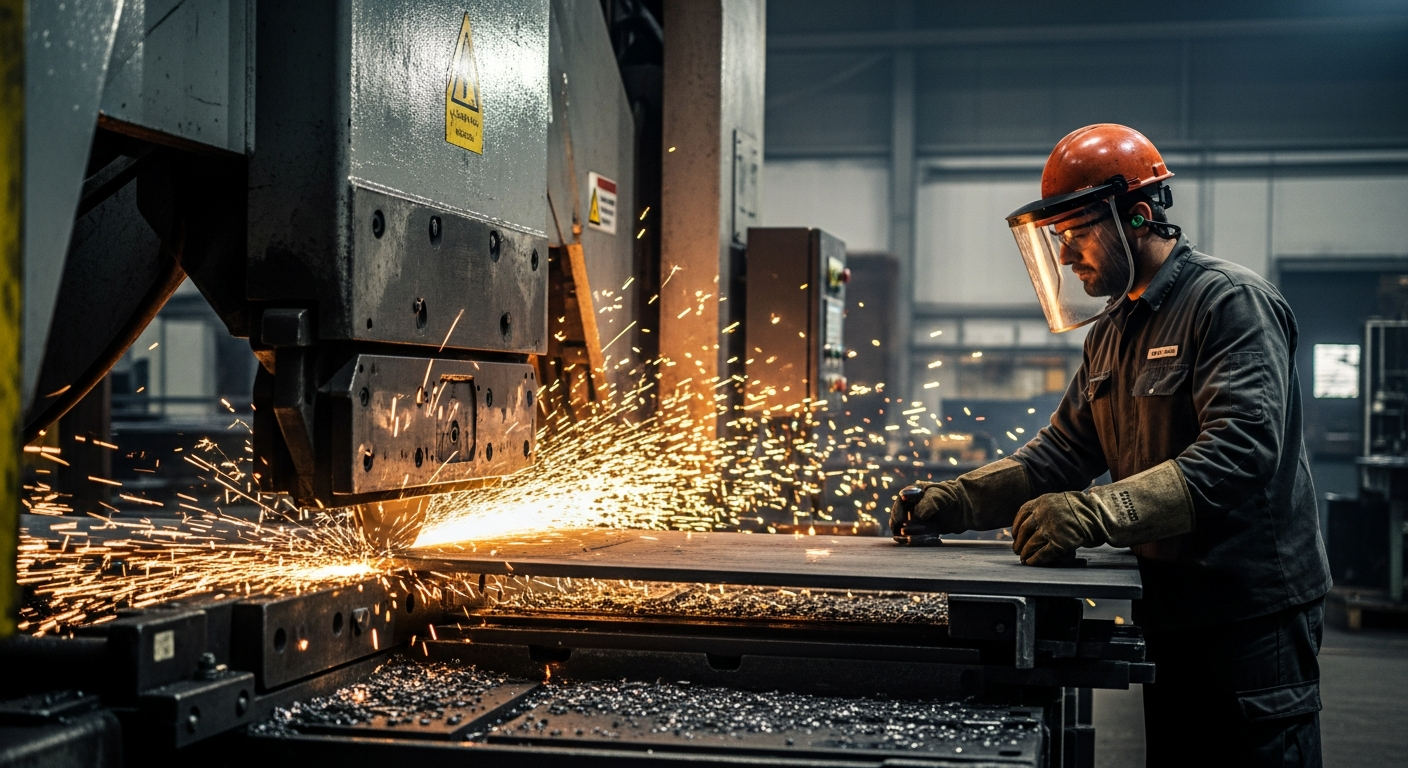
Every plant manager in the steel and metals industry knows the sound of a healthy shearing line. It’s a steady, rhythmic heartbeat—load, clamp, shear, release. But you also know the silence that follows a breakdown.
In 2026, the pressure to keep that heartbeat going is higher than ever. But with legacy shearing machines—some operating for 15 to 30 years—unlocking the next level of performance is a challenge. You face unique issues like Improper Blade Gap, where incorrect settings or gib wear increase cutting force, and Volumetric Efficiency Loss, where degrading oil viscosity or pump wear invisibly slows cycle times.
Many teams get caught in a reactive cycle—responding to unplanned downtime and the "run-to-failure" trap, where emergency repairs cost 3 to 9 times more than planned maintenance (Source: Strainlabs). You aren't looking for a theoretical digital transformation; you are looking for a practical way to gain control.
This guide cuts through the noise to compare the best real time monitoring solutions for shearing machines and platforms available today. We focus on practical downtime monitoring solutions that equip your team to win.
Top Real Time Monitoring Solutions for Uptime Control in 2026
The market is crowded with solutions ranging from complex, "rip-and-replace" systems to lightweight, practical overlays. Here is how the top players compare for steel and metals environments.
Guidewheel: The Practical, FactoryOps Choice
Best for: Plant managers who need immediate visibility, universal compatibility, and operator engagement without a massive IT project.
Guidewheel stands out by rejecting complex integration projects. Instead of requiring complex integration with legacy PLCs, it uses non-intrusive, clip-on sensors that act like a “Fitbit for factories.” These sensors capture the machine’s electrical heartbeat, and algorithms translate that signal into real-time production data.
Why it works for Shearing Machines:
Universal Compatibility: Whether you have a brand-new CNC shear or a decades-old hydraulic press, Guidewheel works. It clips onto the power supply, bypassing the need to interface with outdated or proprietary controllers.
No Facility Internet Required: A key differentiator is that Guidewheel does not require a facility's Wi-Fi or Ethernet to populate dashboards, making it ideal for steel plants with spotty connectivity.
FactoryOps Focus: It is built for the operator. The "Operator Sidekick" and scoreboards empower the frontline to tag downtime reasons and see their progress in real-time, turning them into champions of productivity.
Proven Impact:
According to a Rapac case study, the system drives tangible efficiency gains.
18% increment in operations efficiency... Guidewheel has been fantastic for us to capture downtime and determine root causes. We use the system to help determine our PMs based on the downtime data we receive.
Steven Cummings, Maintenance Manager, Rapac, via Guidewheel Customer Research
Considerations:
Guidewheel is designed for rapid deployment and actionable insights. It is not a heavy SCADA system designed to control machine parameters, but rather an overlay that provides the visibility needed to manage operations.
MachineMetrics & Amper: The Cloud-First Real Time Monitoring Platforms
Best for: Facilities prioritizing deep data extraction and cloud analytics.
MachineMetrics and Amper are strong contenders in the real time monitoring space. They focus heavily on extracting data directly from machine controls (where possible) or using current transformers. They excel at providing high-level analytics and have strong cloud infrastructure.
Strengths:
Deep Analytics: These platforms offer robust reporting suites for detailed historical analysis.
Scalability: Cloud-based architectures allow for scaling across multiple sites.
Limitations:
User feedback suggests that the depth of these platforms can sometimes come with a learning curve or technical latency.
For a shearing line operator, even a slight delay or complex interface can hinder the "real-time" value needed to catch a micro-stop before it cascades.
Vorne & Redzone: The Productivity & Culture Focus
Best for: Plants focused heavily on OEE gamification and workforce collaboration.
Vorne (known for its XL Productivity Appliance) and Redzone focus on the human element—gamifying production targets and facilitating communication. Vorne is hardware-centric, often using visible scoreboards, while Redzone uses tablet-based social collaboration tools.
Strengths:
Visual Management: Vorne's LED scoreboards are legendary for shop floor visibility.
Collaboration: Redzone excels at connecting shifts through chat and huddle features.
Limitations:
These solutions can be rigid or expensive to deploy. Vorne requires specific hardware purchases, and Redzone's software interface has received critiques regarding usability.
Redzone web-admin has some bugs to work out. would like a feature to see comments made in chats or forums by date instead of having to endlessly scroll...
Juan A., Production Manager, Capterra
[One con is] That the data collector is not included in the price of the equipment
Marcelo R., Production Manager, Capterra
The Asset Health Specialists: Augury, Asset Watch, Neuron Soundware, IPercept
Best for: Predictive maintenance focused specifically on vibration and sound analysis.
Augury, Asset Watch, Neuron Soundware, and IPercept sit in a specialized category. They rely heavily on advanced vibration sensors and acoustic monitoring to detect specific mechanical failures (bearings, gearboxes) before they happen.
Strengths:
Deep Diagnostics: Excellent for catching bearing failures on critical motors.
Predictive Focus: They are purely focused on asset health rather than throughput or OEE.
Limitations:
These tools are often expensive and narrow in scope. While they might save a motor, they won't necessarily help you track changeover times, cycle time drift, or operator efficiency. For a plant manager, they solve a maintenance problem but not necessarily the broader throughput problem.
Inductive Automation (Ignition): The Integrator's Choice
Best for: Plants with large internal engineering teams who want to build a custom SCADA system.
Inductive Automation offers a powerful platform that allows you to build almost anything. It is the "blank canvas" of the industry.
Strengths:
Customization: Limitless possibilities if you have the coding skills.
Control: Deep integration into PLCs.
Limitations:
This is the opposite of "plug-and-play." It typically requires significant development time, expensive integrators, and ongoing maintenance. For a plant manager operating in reactive mode, this often looks like a 12-month "nightmare project" rather than a quick win.
Comparison: Speed to Value for Machine Downtime Tracking in Shearing Operations
When downtime costs thousands per hour, speed matters. Here is how the approaches stack up.
Feature | Guidewheel | Deep Data Platforms (MachineMetrics/Amper) | Asset Health Specialists (Augury/Asset Watch) | DIY/SCADA (Inductive Automation) |
|---|---|---|---|---|
Deployment Speed | Days (Clip-on) | Weeks/Months | Weeks | Months/Years |
Legacy Compatibility | Universal (Any Age) | Varies (Often requires PLCs) | High (Vibration sensors) | Low (Requires Integration) |
Internet Requirement | None (Cellular/Edge) | High (Cloud-dependent) | High | High |
Primary Focus | FactoryOps / Throughput | Data Extraction | Bearing/Motor Health | Custom Control |
Ease of Use | Operator-First | Engineering-First | Maintenance-First | Developer-First |
Transforming Steel Operations with Real Time Monitoring Solutions: From Heavy Machines to Smart Agility
In the steel industry, margins are forged in the details. You cannot afford to let a 30-year-old hydraulic shear dictate throughput or rely on "run-to-failure" habits. The difference between a profitable shift and a loss often hides in the seconds lost to hydraulic lag or unrecorded micro-stops. Productivity and sustainability are now the same goal: every wasted stroke is lost energy and capacity.
Real transformation doesn't require a complex overhaul; it starts by making the invisible visible. By tracking the electrical heartbeat of your machines, you empower operators with the truth they need to act. When you give your team a scoreboard, they stop being passive observers of failure and become active drivers of efficiency. The technology is ready—it is time to listen to what your machines are saying.
Turn Your Shearing Lines into Engines of Profitability with Real Time Monitoring Solutions
Your shearing lines don’t need a six-month software project. They need clear, real-time facts. Guidewheel’s FactoryOps platform uses non-intrusive sensors to bypass complex PLC work and capture run / idle / down on your lines in minutes, even on dusty, high-vibration, legacy equipment. Your team can visualize downtime periods and easily tag the root causes—whether material feed, hydraulics, or changeovers—to act the same shift.
Ready to stop the guesswork and stabilize your bottlenecks?
Book a demo to see what real-time visibility on your shearing operations would look like, and define a low-risk starting point.
About the Author
Lauren Dunford is the CEO and Co-Founder of Guidewheel, a FactoryOps platform that empowers factories to reach a sustainable peak of performance. A graduate of Stanford, she is a JOURNEY Fellow and World Economic Forum Tech Pioneer. Watch her TED Talk—the future isn’t just coded, it’s built.