No items found.
blog
Real-Time Shredder Performance Metrics: Best Tools to Optimize Regrind Efficiency, Reviewed
By: Guidewheel
Updated:
December 18, 2025
8 min read
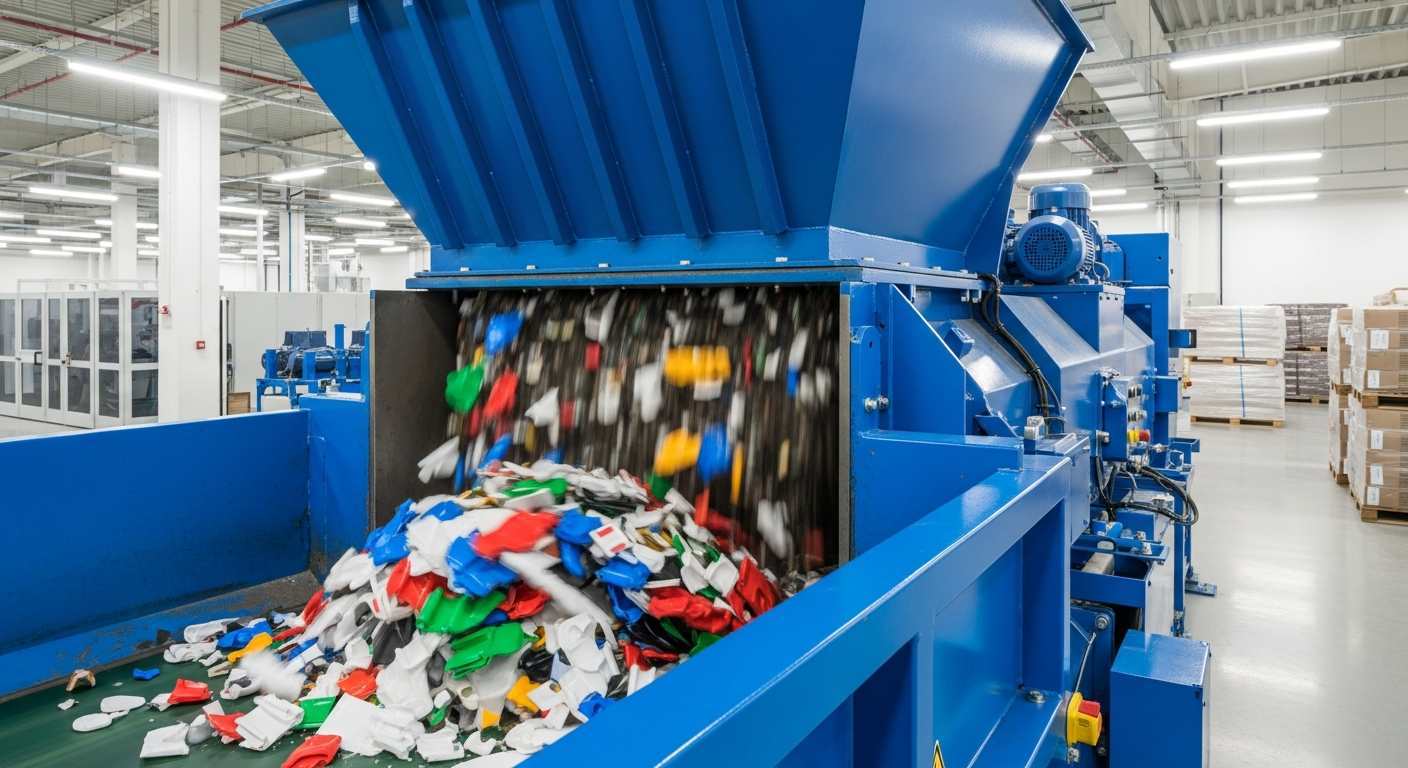
In the fast-paced world of plastics and packaging, the plastic shredder machine is often the unsung hero—or the villain—of the plant floor. When it's running, regrind flows, and production hums. When it jams, bridges, or a motor trips, the entire plastic recycling line starves, and you're suddenly scrambling to get operations back on track.
For the hands-on plant manager, shredding machines represent a massive opportunity to unlock hidden capacity. Yet, turning the chaotic, noisy reality of shredding operations into clean, actionable shredder KPIs has historically been a nightmare. Many plastic shredders are legacy assets—built decades ago without Ethernet connectivity or PLC integration—making them black boxes to the front office. You might know the machine is running, but you don't know if it's actually processing material or just idling and wasting energy.
This guide explores how to transform shredder throughput from a black box into a transparent, manageable metric. We will look at how real-time shredder monitoring software can help you justify investments, reduce downtime, and shift toward a more proactive operational model.
Comparing Shredder Monitoring Solutions by Real-Time Shredder KPIs
The most effective way to monitor a plastic shredder machine—regardless of its age—is by tracking its "heartbeat": the electrical current it draws. Shredder motors tell a story. A spike in current might indicate a jam or a tough piece of material. A steady rise in baseline amperage over weeks often points to blade wear or cooling system degradation. By using non-intrusive, clip-on sensors, you can capture data without altering the machine's control wiring.
When selecting shredder monitoring software, the landscape in 2026 is crowded. Solutions range from heavy enterprise systems to agile, clip-on tools. The table below compares key players based on the needs of a plant manager focused on quick deployment and actionable data.
Feature | Guidewheel | Vorne | MachineMetrics | Redzone | Inductive Automation (Ignition) | Vibration Specialists (Augury, etc.) |
|---|---|---|---|---|---|---|
Primary Focus | FactoryOps / Production & Process | Visual Display / Counter | CNC / Precision Machining | Workforce / Collaboration | SCADA / Custom Development | Machine Health / Vibration |
Installation | Clip-on sensors (Plug & Play) | Hardware wiring required | Integration required | Software/Tablet heavy | Heavy Engineering Project | Sensor installation required |
Legacy Compatible | Yes (Universal) | Yes (via digital I/O) | Varies (PLC focus) | Varies | Requires PLCs/Gateways | Yes |
Network Req. | Cellular Gateway (No IT needed) | Ethernet/Wi-Fi | Ethernet/Wi-Fi | Wi-Fi Heavy | Deep IT Integration | Varies |
Best For | Quick wins, mixed fleets, throughput | Simple count display | Precision metal parts | Culture change programs | Complex, custom control | Protecting critical shredder motors |
Guidewheel
Positioning: The "FactoryOps" platform for operators and managers who need immediate visibility.
Guidewheel stands out for its FactoryOps philosophy—empowering the people closest to the work. It uses simple clip-on sensors that work on any shredder, from a brand-new Vecoplan to a 30-year-old localized grinder. Because it utilizes cellular gateways, it doesn't require a facility internet connection or a complex IT project. This allows plant managers to bypass the "nightmare project" phase and go straight to seeing data. It focuses heavily on determining why a machine is down or idling, directly addressing shredder efficiency optimization.
With Guidewheel, we now get key metrics like production, downtime, downtime codes, scrap, and cycle time automatically and accurately. Our team no longer takes time to track manually and has been able to instead invest that time in improvements. Everybody knows when we’re winning or losing.
Edgar Yerena, Custom Engineered Wheels via Guidewheel's Customer Research
Vorne (XL Productivity Appliance)
Positioning: Visual management and simple counting.
Vorne is famous for its LED scoreboards. It is excellent for showing a large "Target vs. Actual" number to the floor. However, for complex downtime analysis or multi-site visibility, it can feel limited to the hardware installed at the line.
Limitation:
Lack of options for setting up rotating shifts.
Ken M., Plant Manager, Capterra
MachineMetrics
Positioning: Deep analytics for CNC and precision machining.
MachineMetrics excels in high-frequency data, particularly for modern CNC equipment. While it can monitor small shredders, mini shredders, and plastic shredders, its feature set is often over-engineered for the simple "run/stop/idle" and amperage tracking needs of a plastics shredder, which can reportedly lead to a higher total cost of ownership for this specific use case.
Redzone
Positioning: Workforce collaboration and culture.
Redzone focuses on "social manufacturing"—connecting workers via tablets. It is powerful for culture change but typically requires a significant organizational overhaul and high subscription costs.
Limitation:
While Redzone offers a wide range of features and functionality, its complexity can be a bit overwhelming for new users.
Brian R., Ops Supervisor, Capterra
Inductive Automation (Ignition)
Positioning: The unlimited toolkit for engineers.
Ignition is the industry standard for SCADA. If you have a team of engineers and 12 months to build a custom system, you can make it do anything. For the manager who needs data this week to make immediate operational decisions, Ignition is often too resource-intensive.
Amper
Positioning: Similar electrical monitoring approach.
Amper uses a comparable machine monitoring methodology, tracking electrical signals to measure performance. When evaluating solutions with this approach, key differentiators often lie in the depth of the "FactoryOps" support model and whether the software interface is designed for operator engagement or pure engineering analysis.
Asset Watch, Augury, Neuron Soundware, IPercept
Positioning: Machine Health and Predictive Maintenance.
These solutions use vibration and acoustic monitoring to assess the condition of bearings and motors, enabling early detection of potential component failures. While they are effective at minimizing unexpected equipment downtime due to critical faults, their primary focus is on machine health rather than providing detailed insights into operational performance, throughput, or production metrics. They assess machine readiness rather than quantifying production efficiency.
From Bottleneck to Backbone: The Future of Plastic Shredder Machines in Regrind Operations
In the modern plastics facility, the shredder is no longer just a disposal unit; it is the first step in the value chain. As the industry pivots toward circularity and higher percentages of regrind, the reliability of your plastic recycling machines directly dictate the profitability of your extrusion or molding lines. If the shredder stops, the regrind silo empties, and eventually, the primary lines starve. Treating these machines like auxiliary equipment is a strategy of the past.
The most successful plants in 2026 aren't necessarily buying brand new plastic shredder machines; they are getting smarter about the ones they already have. They are moving away from the "run-to-failure" mentality and adopting a "monitor-to-optimize" approach. By visualizing the electrical heartbeat, operators can identify when the machine is idling unexpectedly, prompting them to check for bridging or empty hoppers. This shift doesn't require a massive capital expenditure or a multi-year IT overhaul. It simply requires a willingness to listen to what your machines have been trying to tell you all along.
Stop Guessing at Shredder Capacity Utilization KPIs
Your shredders don’t need a massive project; they need clear signals. Clip-on sensors tied into real-time shredder KPI monitoring let you see when a motor is actually cutting, idling, or down—along with the energy it’s pulling. That’s the foundation for accurate shredder KPIs, better feed rates, and fewer surprises on regrind.
If you want to test this without disruption, start on a single critical shredder, validate the data with your team, and then decide where to scale. Book a Demo with Guidewheel to walk through how simple clip-on sensing and real-time visibility can plug into your existing operations and help your teams act on what’s really happening at the motor.
About the Author
Lauren Dunford is the CEO and Co-Founder of Guidewheel, a FactoryOps platform that empowers factories to reach a sustainable peak of performance. A graduate of Stanford, she is a JOURNEY Fellow and World Economic Forum Tech Pioneer. Watch her TED Talk—the future isn’t just coded, it’s built.