No items found.
blog
How Real-Time Monitoring is Transforming Asset Utilization in the Plastics & Packaging Sector
By: Guidewheel
Updated:
December 19, 2025
7 min read
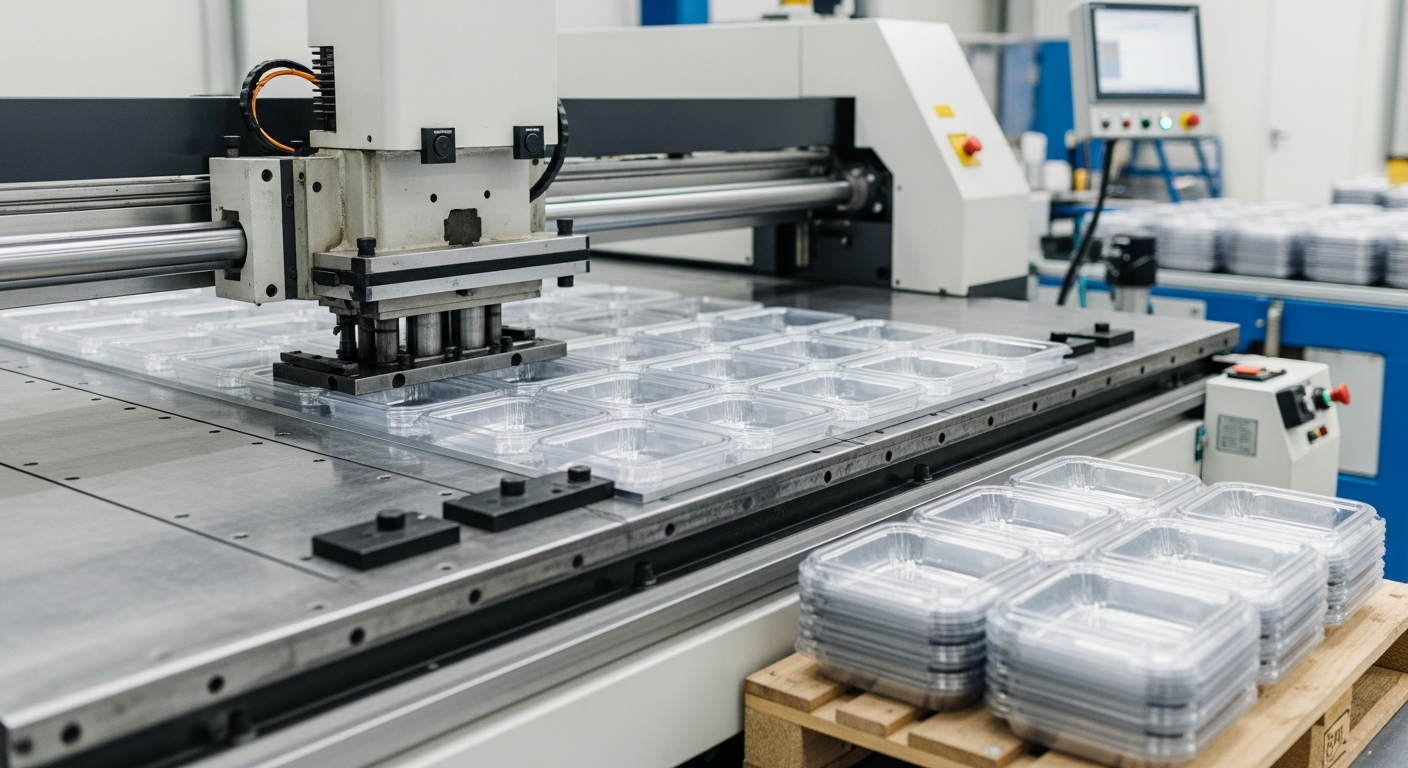
The die cutting machine market is undergoing a fundamental shift. What was once purely mechanical equipment management has evolved into an intelligent, data-driven operational ecosystem. With the global market exceeding USD 1.8 billion in 2025 (Source: Gminsights), manufacturers in the Plastics & Packaging sector face increasing pressure to optimize these assets. However, operational visibility remains a significant hurdle.
Based on Guidewheel’s sensors over the last few months, between September and November 2025, we have analyzed the performance of die cutting operations to establish clear industry benchmarks. This analysis draws from a dataset covering specific manufacturing areas within Plastics & Packaging, including over 1.2 million machine-minutes from dozens of die cutting machines.
The following report details these findings, offering plant managers and operations directors a data-backed framework for understanding uptime, identifying hidden capacity, and leveraging real-time monitoring to drive continuous improvement.
How Die Cutting Machines Are Transforming Plastics & Packaging Uptime Through Real-Time Monitoring in 2025

Figure 1: Distribution of operational downtime drivers for Die Cutting machinery (Source: Guidewheel Performance Analysis, n=over 1.2 million machine-minutes).
Analyzing Downtime Drivers
While "No Business/Orders" remains the statistically dominant reason for machine inactivity (accounting for roughly 65% of total downtime in the analyzed period), this is often a function of market demand rather than operational efficiency. To find actionable improvements, we must examine the operational loss drivers that plant managers can directly control.
The data indicates that when orders are available, the following four categories drive the majority of lost production time:
Maintenance & Cleaning (11.5% of Total Downtime): This is the largest actionable loss driver. The analysis reveals that these events are infrequent but lengthy, averaging roughly 209 minutes (3.5 hours) per event. Operator notes frequently cite "deep cleaning" and "planned maintenance." The duration suggests that maintenance in this sector is often batched into large blocks rather than performed continuously, presenting an opportunity to optimize scheduling. (Source: Guidewheel Performance Analysis)
Other Operational (8.7% of Total Downtime): Averaging 118 minutes per event, this category encompasses start-ups, administrative delays, and meal breaks. These "soft" downtime costs often accumulate unnoticed but represent a significant portion of a shift’s potential output. (Source: Guidewheel Performance Analysis)
Mechanical Breakdowns (5.5% of Total Downtime): While accounting for a lower total percentage than planned maintenance, breakdowns occur more frequently (0.12 times per shift vs 0.07 for maintenance). The average duration is shorter, at approximately 62 minutes, but the unpredictability disrupts flow and scheduling. Notes often link these failures to upstream/downstream integration issues rather than isolated die cutter failure. (Source: Guidewheel Performance Analysis)
Staffing Issues (4.7% of Total Downtime): When staffing issues occur, they impact operations severely, with an average duration of 202 minutes. This highlights the vulnerability of die cutting lines to skilled labor availability. (Source: Guidewheel Performance Analysis)
The Hidden Cost of Changeover Variability
In high-mix environments typical of Plastics & Packaging, changeover efficiency is critical. The performance analysis reveals that consistency, rather than just raw speed, is the primary challenge.
Median Changeover Time: 24.0 minutes.
Performance Range: The slowest 25% of changeovers take 35 minutes or longer, while the best recorded times are as low as 2 minutes.
The Variability Gap: The data shows a changeover spread of 254%.
(Source: Guidewheel Performance Analysis)
This high variability suggests a lack of standardized processes. When one shift performs a changeover in 15 minutes and another takes 40 minutes for the same task, production schedules become unreliable. Implementing Single-Minute Exchange of Die (SMED) methodologies to standardize these procedures could significantly reduce this spread.
Cross-Industry Context: What Is Possible?
Comparing Plastics & Packaging performance against other sectors provides context for optimization. While material differences play a role, cross-industry benchmarks highlight "art of the possible" scenarios for die cutting machinery.
Industry Sector |
Median Runtime |
Median Changeover |
|---|---|---|
Food & Beverage |
62% |
N/A |
Pulp & Paper |
31% |
13.0 min |
Packaging & Containers |
21% |
N/A |
Plastic, Packaging & Containers |
17% |
24.0 min |
Industrial Machinery |
17% |
N/A |
(Source: Guidewheel Performance Analysis)
The Pulp & Paper sector achieves nearly double the median runtime and roughly half the changeover time of the Plastics sector. While paper processing allows for different continuous flow characteristics, this gap indicates that process improvements—specifically regarding changeover reduction—could yield substantial gains for plastics manufacturers.
Transforming Operations with Real-Time Monitoring
The analysis above demonstrates that the barriers to higher uptime are often identifiable: variable changeovers, lengthy maintenance blocks, and intermittent mechanical stoppages. However, identifying these trends retroactively is different from managing them in real-time. This is where modern monitoring solutions bridge the gap.
The Guidewheel Approach
Guidewheel offers a monitoring solution designed specifically to address the realities of the Plastics & Packaging floor. Recognizing that facilities often run a mix of legacy die cutters and modern lines, the platform focuses on universal accessibility and immediate value.
Universal Compatibility: Guidewheel utilizes simple clip-on sensors that can be installed on any machine—from a 30-year-old flatbed die cutter to a brand-new rotary line—without integrating into complex PLCs. This ensures that the entire production floor is visible, not just the newest assets.
Flexible Connectivity: Unlike systems that demand hardwired IT infrastructure, Guidewheel can operate via cellular hubs. This allows facilities to bypass complex IT projects and get data flowing immediately, though internet connectivity is also supported where available.
FactoryOps Philosophy: The core value lies not just in the sensors, but in the proprietary algorithms that translate simple current data into actionable production insights. The platform is built for the "FactoryOps" approach—empowering the operators closest to the problems to solve them, rather than hoarding data in the back office.
By providing a "heartbeat" of the machine, this technology transforms the vague notion of "downtime" into specific, time-stamped events (like the "Mechanical Breakdown" or "Staffing Issue" categories identified in our data), enabling teams to attack the root causes of lost productivity.
Start Optimizing Your Operations
The data indicates that while median performance in the industry leaves room for improvement, the pathway to top-quartile performance is clear: reduce changeover variability, optimize maintenance blocks, and gain real-time visibility into operational losses.
Different facilities will always have unique goals and contexts, but the need for accurate data is universal. Transitioning from manual logs to automated, real-time monitoring is the most effective way to uncover hidden capacity.
Ready to unlock the hidden capacity of your die cutting operations? Book a Demo
About the Author
Lauren Dunford is the CEO and Co-Founder of Guidewheel, a FactoryOps platform that empowers factories to reach a sustainable peak of performance. A graduate of Stanford, she is a JOURNEY Fellow and World Economic Forum Tech Pioneer. Watch her TED Talk—the future isn’t just coded, it’s built.