No items found.
blog
How OEE Tracking Software Reduces Capping Machine Downtime in Consumer Goods Packaging
By: Guidewheel
Updated:
December 19, 2025
9 min read
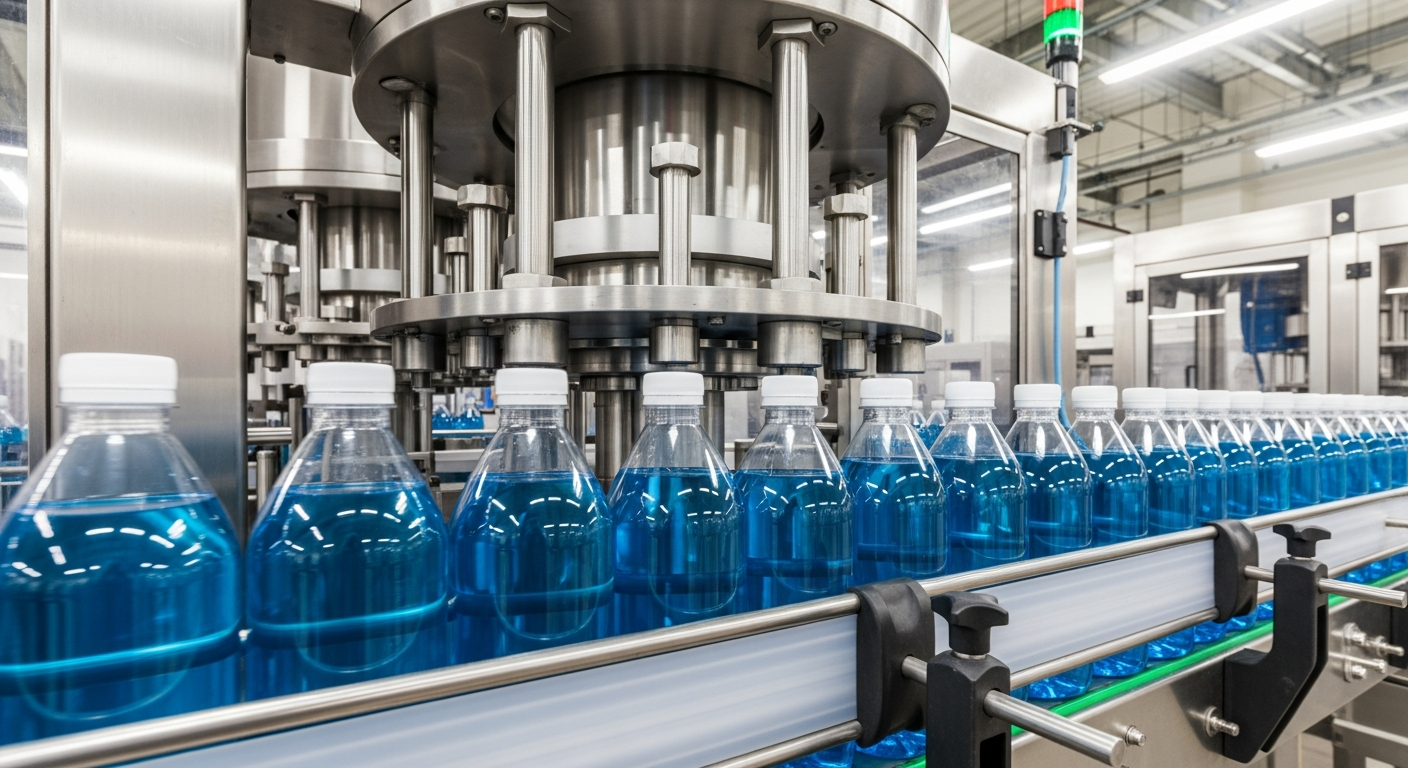
For plant managers and operations directors in the Consumer Goods sector, the packaging line often represents the heartbeat of the facility. Within that line, the filler is typically the bottleneck but capping and sealing machines act as critical points—if they stop, the filler backs up, and the labeler runs dry. In high-speed environments ranging from Food & Beverage to Household Goods, even minor inefficiencies in these assets can compound into significant throughput losses.
Recent performance data indicates that while some facilities have optimized these final packaging stages to achieve high availability, many others exhibit operational variance that goes unrecorded in manual logs. The difference between a line running at 40% efficiency and one running at 70% often lies not in the age of the machinery, but in the visibility the operations team has into why the machine stopped.
The State of Capping & Sealing Performance
To understand the opportunities for optimization, we must first establish a baseline of current industry performance. The following analysis is based on Guidewheel's sensors over the last few months, between September and November 2025, covering a dataset of 2.7 million machine-minutes across the Consumer Goods sector (specifically Food & Beverage, Household Goods, and Pet Products).
It is important to note that these benchmarks serve as reference points. Every facility operates under unique constraints regarding materials, safety protocols, and product mix, meaning optimal performance targets should always be adapted to your specific operational context.
Uptime Benchmarks by Machine Type
Data from the last few months reveals significant performance variance across different equipment types within Consumer Goods packaging lines.
Packagers (Food & Beverage): This category, which often includes capping and integrated packaging units, demonstrates the highest stability with a median uptime of 70%. This suggests that when optimized, these assets can sustain high throughput (Source: Guidewheel Performance Analysis).
Wrappers (Food & Beverage): These units show a median uptime of 45%, indicating they are frequently a source of line interruptions or are subject to more frequent stops for material replenishment (Source: Guidewheel Performance Analysis).
Fillers (Food & Beverage): Often paired directly upstream of cappers, fillers record a lower median uptime of 29%. This synchronization gap between fillers (29%) and downstream packagers (70%) highlights a common buffering challenge in packaging lines (Source: Guidewheel Performance Analysis).
When we look at the broader "Packaging & Containers" sector, the contrast is stark. Packagers in general manufacturing settings achieved a median uptime of only 29%, compared to the 70% seen in Food & Beverage. This 2.4x performance gap suggests that the rigorous standardization and continuous run requirements of the Food & Beverage sector drive higher asset utilization, a practice that other Consumer Goods sectors could emulate.
How OEE Tracking Software Reduces Capping Machine Downtime in Consumer Goods Packaging in 2026
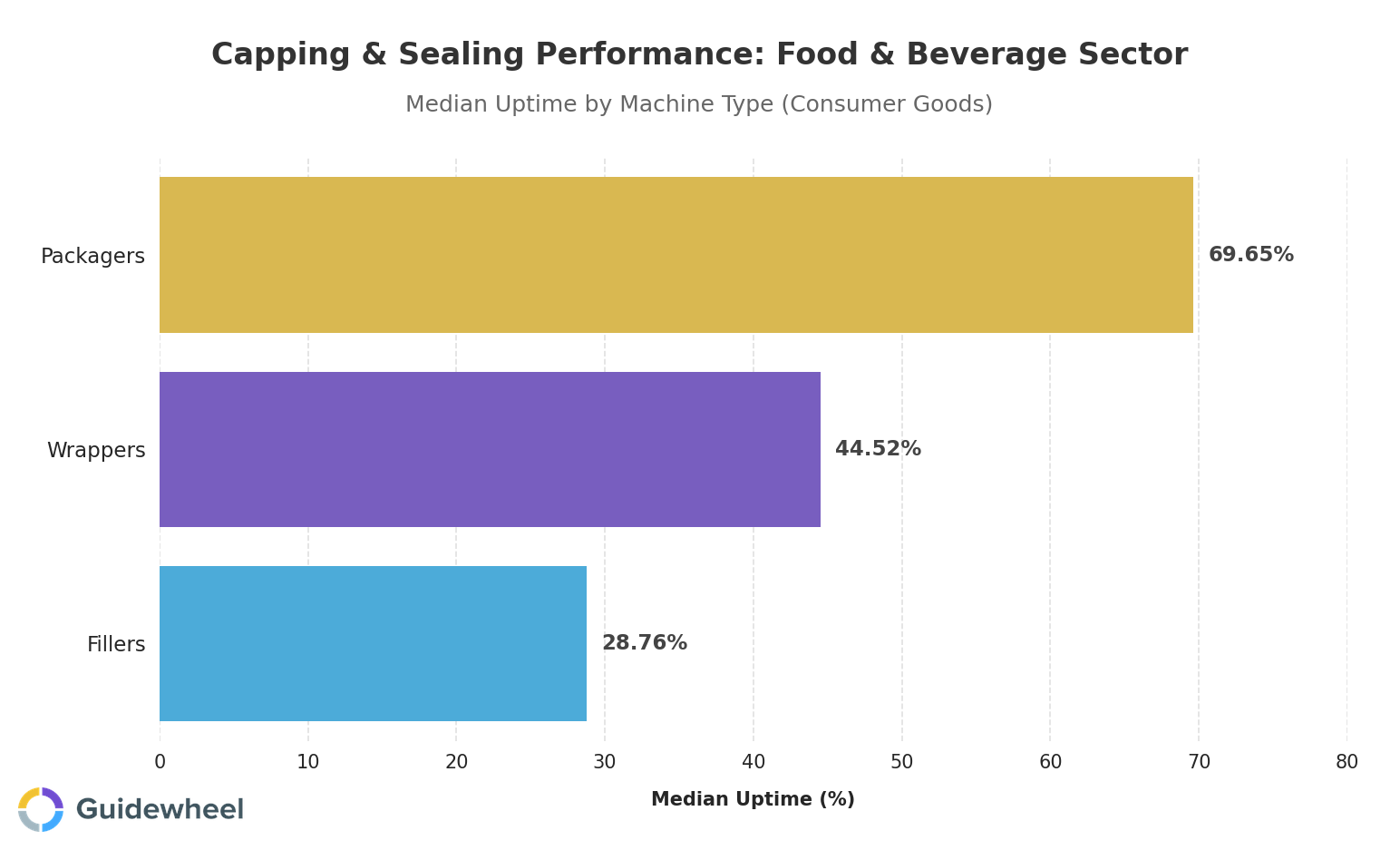
Figure 1: Median uptime of capping and sealing machinery within the Food & Beverage sector. (Source: Guidewheel Performance Analysis, n=2.7 million machine-minutes)
Analyzing the Root Causes of Downtime
Improving OEE requires moving beyond simply knowing that a machine is down to understanding why it is down. The performance analysis reveals that while catastrophic failures grab headlines, the cumulative impact of minor operational stops often outweighs major breakdowns.
Operational Stops vs. Mechanical Failure
In the Food & Beverage sector, the data indicates that 63% of total downtime falls under "Other Operational" issues (Source: Guidewheel Performance Analysis). These are typically short, frequent stops—jams, sensor misalignments, or minor adjustments—that average about 44 minutes per event.
In contrast, Mechanical Breakdowns account for 18% of downtime but are more intensive to repair. While less frequent, these events disrupt production flow significantly.
Key Takeaway: If a plant manager focuses solely on preventing mechanical breakdowns, they are addressing less than one-fifth of the problem. The biggest opportunity lies in reducing the friction of daily operations—the cumulative impact of frequent operational pauses.
Secondary Downtime Drivers
While operational issues dominate, secondary drivers represent actionable opportunities for improvement:
Maintenance & Cleaning (12%): In Food & Beverage, washdowns (allergen vs. non-allergen) average 73 minutes per event. Optimizing the scheduling of these necessary events is a prime target for OEE software (Source: Guidewheel Performance Analysis).
Material Supply Issues (4%): Short stops caused by starving baggers or running out of caps account for a small but frustrating percentage of downtime. These are purely logistical issues that real-time visibility can eliminate (Source: Guidewheel Performance Analysis).
The Role of Real-Time Monitoring in Operations
The performance data makes one thing clear: the majority of efficiency losses are operational, not mechanical. This means they are within the control of the plant team to fix, provided they have the right information.
Many facilities still rely on manual logs or clipboard tracking. The limitation of this approach is that operators rarely log the 2-minute jam or the 5-minute wait for materials. Yet, as the data shows, these "Other Operational" issues make up nearly two-thirds of all downtime. This is where automated OEE tracking software bridges the gap.
Capturing the "Micro-Stops"
Automated monitoring detects every heartbeat of the machine. It captures the exact moment a capper stops and prompts the operator to categorize the reason. This shifts the culture from reactive operations to data-driven problem solving.
For example, if the data reveals that a specific capper has frequent "cap jam" errors only during the first hour of a shift, the maintenance team can investigate start-up calibration procedures rather than rebuilding the entire machine.
Benchmarking for Continuous Improvement
With accurate data, benchmarks become useful tools rather than abstract guesses.
Targeting Changeovers: If your facility’s packager changeovers average 35 minutes, the industry benchmark of 10 minutes serves as a proven reference point for what is possible (Source: Guidewheel Performance Analysis).
Balancing the Line: Seeing the uptime gap between fillers (29%) and packagers (70%) allows operations directors to make informed decisions about accumulation buffers or line speed balancing (Source: Guidewheel Performance Analysis).
Solutions for Consumer Goods Manufacturers
To close the gap between current performance and industry potential, Consumer Goods manufacturers are increasingly turning to dedicated monitoring solutions. The goal is to gain visibility without adding complexity to the IT infrastructure or burdening operators with difficult software.
A Modern Approach to Machine Monitoring
Traditional monitoring projects often involve months of "rip-and-replace" work, requiring deep integration into PLCs and heavy IT involvement. However, for many Plant Managers, the goal is simply to see if the line is running and, if not, why.
Guidewheel approaches this challenge with a FactoryOps philosophy—believing that the tools should serve the people closest to the work.
Universal Compatibility: Whether the capping machine is a brand-new servo-driven unit or a legacy mechanical system from the 1990s, the need for data is the same. Guidewheel uses non-intrusive clip-on sensors that clamp around the power cord. This measures the electrical current—the machine's "heartbeat"—to determine running status without touching the machine's internal logic.
Proprietary Algorithms: The core value lies not just in the sensor, but in how the data is processed. Proprietary algorithms analyze the current draw to distinguish between a machine that is running, idling, or down, and can even detect micro-stops that manual tracking misses.
Connectivity Options: While many systems require complex plant Wi-Fi integrations, Guidewheel is designed to operate via secure cellular connections, bypassing the need for extensive IT provisioning. However, for facilities where internet connectivity is available and preferred, the system fully supports standard internet connections as well.
Rapid Deployment: Because it bypasses the PLC, this type of system can be deployed across an entire packaging hall in days, not months.
From Data to Action
The ultimate goal of monitoring is not just to generate charts, but to drive behavior change. When operators can see their performance in real-time, they become active participants in improvement.
Reducing "Other Operational" Downtime: By identifying that minor stops are consuming 63% of capacity, teams can focus on operator training or minor material adjustments.
Optimizing Maintenance: Instead of calendar-based maintenance, teams can use run-hour data to perform maintenance only when needed, reducing the 12% of time spent on cleaning and maintenance (Source: Guidewheel Performance Analysis).
Start Optimizing Your Operations
The data indicates that significant capacity is hidden within the normal operational friction of capping and sealing lines. By moving from manual assumptions to automated, real-time facts, Consumer Goods manufacturers can uncover this capacity.
Book a Demo with Guidewheel to see how simple, effective monitoring can transform your packaging operations.
About the Author
Lauren Dunford is the CEO and Co-Founder of Guidewheel, a FactoryOps platform that empowers factories to reach a sustainable peak of performance. A graduate of Stanford, she is a JOURNEY Fellow and World Economic Forum Tech Pioneer. Watch her TED Talk—the future isn’t just coded, it’s built.