No items found.
blog
OEE Tools Compared: Traditional vs Modern Software for Slitting Line Performance
By: Guidewheel
Updated:
December 18, 2025
7 min read
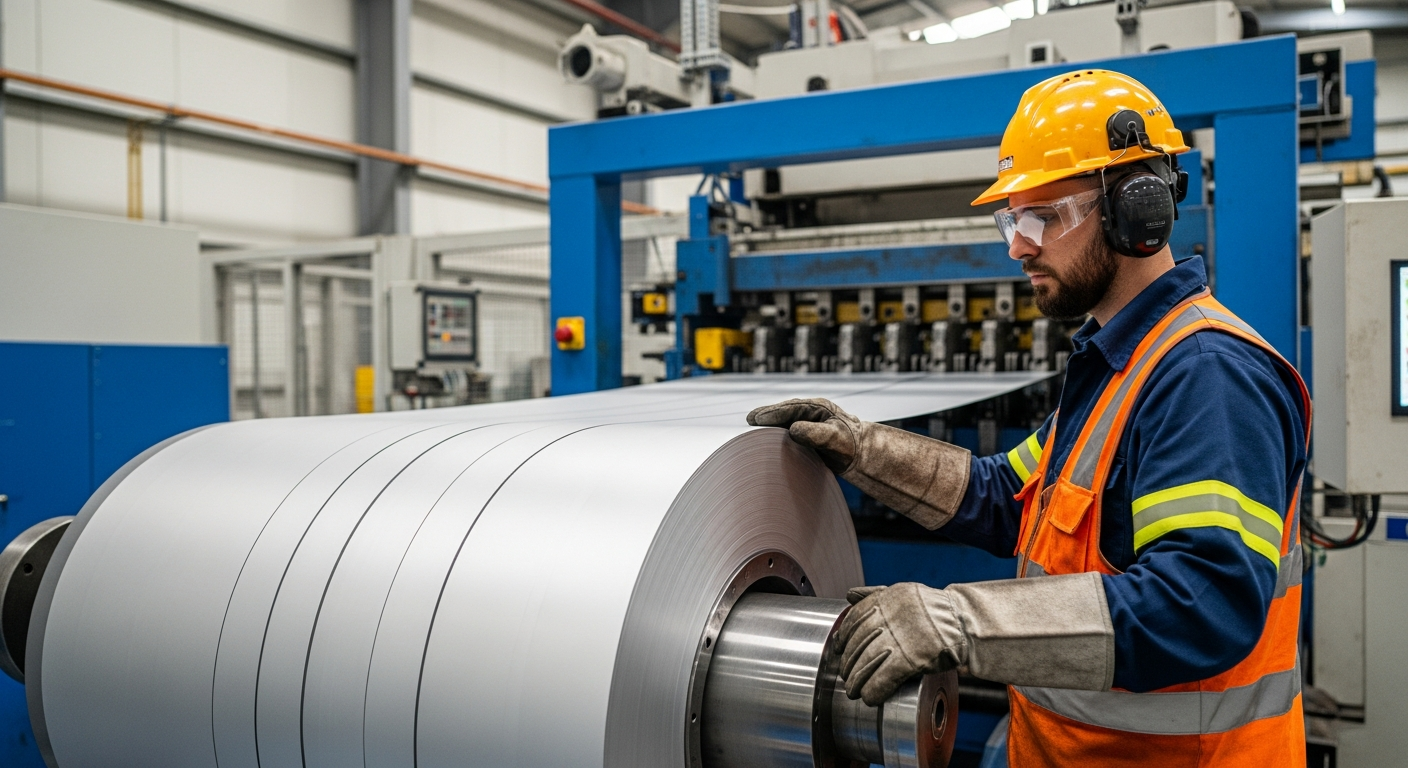
As a plant manager in the steel and metals industry, you know the impact of every minute of downtime: missed shipments, overtime costs, and morning meetings where you have to explain performance gaps without data. When teams are forced to react to breakdowns using handwritten logs, it’s impossible to get ahead.
Managing steel slitting lines takes more than grit; it takes visibility. Whether you run vintage slitters or new automated lines, unplanned downtime costs the industry $260,000 per hour (Rock-and-river). In a steel plant, a single hour of halted flow cascades quickly into expedited shipping and damaged customer trust.
The biggest frustration is the lack of defense. When leadership asks why you missed the target, "I think the bearings went" isn't enough. You need to show you caught a load spike and prevented a failure. This guide compares the top steel slitting line OEE software tools, focusing on the hands-on manager who needs actionable insights, not just charts.
Top Tools Compared: Finding the Right Fit for Slitting Lines
When evaluating steel plant machine monitoring software, the market generally splits into a few categories: accessible FactoryOps platforms, hardware-heavy scoreboard solutions, deep PLC integrators, and specialized predictive maintenance tools.
Guidewheel: The Accessible "FactoryOps" Platform
Best for: Rapid deployment on ANY equipment (legacy or new), empowering operators, and seeing value in days, not months.
Guidewheel takes a different approach than traditional heavy software. Recognizing that steel plants often run a mix of equipment ages—from decades-old slitters to modern lines—Guidewheel uses a non-intrusive, clip-on sensor technology. This means it works on all equipment without requiring complex PLC integration or downtime to install.
The system offers Universal Compatibility by clipping onto the power supply to measure current draw, capturing the machine’s electrical “heartbeat” regardless of age or manufacturer. Algorithms then interpret that heartbeat to identify run, idle, and down states, ensuring the focus is on operational insight, not energy monitoring.
A key differentiator is that No Facility Internet is Required. Guidewheel's hubs can utilize cellular gateways, bypassing months of IT security red tape by not needing a connection to the facility's internal network. Following a "FactoryOps philosophy," Guidewheel also focuses on Empowering the Front Line. It provides simple, real-time "winning or losing" scoreboards for operators, helping them spot micro-stops or drift in cycle times immediately.
Evidence from the Floor:
I love the fact that I can also assign our maintenance team work assignments through messages directly through Guidewheel. I can now track what work has been done on what machine and how long the downtime was.
Kimberly S., Assistant Maintenance Manager, Safi via Guidewheel's Customer Research.
Limitations:
Because Guidewheel uses current-sensing rather than direct PLC integration, it won't provide the granular machine parameter data (line speed, arbor tension, hydraulic pressure, etc.) that some engineers crave for deep diagnostics. If your goal is to analyze strip tension or knife load, you'll need a complementary tool. Guidewheel's strength is in production visibility and operator empowerment—helping you win the shift—rather than replacing your maintenance team's diagnostic equipment.
Vorne: The Hardware & Scoreboard Specialist
Best for: Simple, visual production counting on the plant floor using dedicated hardware.
Vorne is well-known for its XL Productivity Appliance—a hardware device that combines a large LED scoreboard with data collection. It is a robust solution for showing operators their immediate count, providing highly visible hardware on the plant floor while focusing heavily on the core OEE metric.
Limitations:
While excellent for visibility, some users find limitations in handling complex operational events common in steel processing, such as changeovers. A user in the Op Ex field noted:
inability to capture a downtime within a changeover, then at the end of the down period, return Vorne to the same changeover event.
John E., Capterra.
For a slitting line where setup and changeovers are major downtime drivers, this rigidity can be a challenge.
Redzone: The Workforce & Compliance Focus
Best for: Driving culture change and compliance in large organizations.
Redzone focuses heavily on the "people" side of manufacturing, gamifying production to engage teams. It is often used in food and beverage but appears in other sectors too, with a strong focus on collaboration, "huddles," and driving behavioral change.
Limitations:
Implementation can be heavy, and the interface can sometimes be a barrier for older workforces—a common demographic in the steel industry. One review highlighted this friction:
Teaching an older generation of newer technology and convincing them of the ease of the product was not the easiest journey!
Wayne, Software Advice.
Additionally, specific operational workflows may face rigidity:
there are some limitations when we do compliance module, for example each check must be linked to a production run or we wouldn't be able to sign off.
Barbara, Software Advice.
MachineMetrics & Inductive Automation: The Deep Data Integrators
Best for: Environments requiring deep integration with PLCs and extensive customization.
This category includes tools like MachineMetrics, which excels at high-frequency data collection directly from machine controls. For modern slitting lines with advanced PLCs, this can provide deep diagnostic data, powerful predictive analytics, and edge connectivity. However, for legacy slitting lines without modern controllers, integration can be complex and costly compared to clip-on sensors.
Another key player is Inductive Automation (Ignition), a SCADA platform that allows you to build almost anything custom. It is extremely flexible but requires significant engineering resources to build and maintain, making it more of a "builder's kit" than an out-of-the-box solution.
Predictive Specialists (Augury, Asset Watch, Siemens Senseye, etc.)
Best for: Targeted health monitoring of critical assets (motors, bearings).
Tools like Augury, Asset Watch, and Siemens Senseye focus specifically on machine health through vibration and ultrasonic monitoring. The key takeaway is that these tools are excellent for "saving the machine" (predictive maintenance) but often lack the broader "winning the shift" (production tracking/OEE) context that a plant manager needs to drive throughput. They are often best used alongside a production monitoring platform rather than as a substitute for OEE software.
Feature Comparison: Steel Slitting Line OEE
Feature | Guidewheel | Traditional PLC-Based Tools | Hardware Scoreboards |
|---|---|---|---|
Deployment Speed | Days (Clip-on sensors) | Months (Integration required) | Weeks (Wiring required) |
Legacy Machine Compatible | Yes, 100% | Difficult / Requires Retrofit | Yes, via sensors |
Facility Internet Needed | No (Cellular Hubs) | Yes (Deep IT integration) | Varies |
Primary Focus | Production Ops & OEE | Machine Diagnostics | Visual Count |
Operator Engagement | High (Simple tools) | Medium (Data heavy) | High (Visual only) |
The Future of Steel Processing is Visible
In steel processing, the margin for error is razor-thin. When a single bearing failure or extended changeover stops the flow of tonnage, it directly impacts yield. The "black box" era—relying on handwritten logs to explain why a slitter ran at 60% capacity—is over. To compete today, you must see the reality of your floor as it happens.
The most successful plants aren't necessarily buying brand-new automated lines; they are squeezing every ounce of capacity out of existing assets. By eliminating the micro-stops that bleed efficiency and standardizing the complex arbor setups that kill availability, you turn legacy machines into high-performance equipment. This isn't about replacing operators. It is about giving the people who know the sound of arbor chatter or dull knives the data they need to win the shift.
Turn Your Slitting Lines into a Competitive Advantage
Your slitting lines, shears, and press brakes are too valuable to run without a clear picture of performance. Guidewheel’s non-intrusive, clip-on sensors connect to any line in minutes, without complex PLC integration or disruption to how you run today. From there, the FactoryOps Platform gives your team real-time visibility into run / idle / down, downtime drivers, and OEE across every shift.
That visibility is the starting point to tackle micro-stops, tighten changeovers, and get more predictable throughput from the assets you already own.
Ready to see what your slitting lines are actually doing?
Partner with us to achieve your production goals. Book a demo today to see how Guidewheel can support your factory operations.
About the Author
Lauren Dunford is the CEO and Co-Founder of Guidewheel, a FactoryOps platform that empowers factories to reach a sustainable peak of performance. A graduate of Stanford, she is a JOURNEY Fellow and World Economic Forum Tech Pioneer. Watch her TED Talk—the future isn’t just coded, it’s built.