No items found.
blog
Molding and Forming Equipment in Consumer Goods Manufacturing: Which Real-Time Visibility Platforms Are Best?
By: Guidewheel
Updated:
December 18, 2025
7 min read
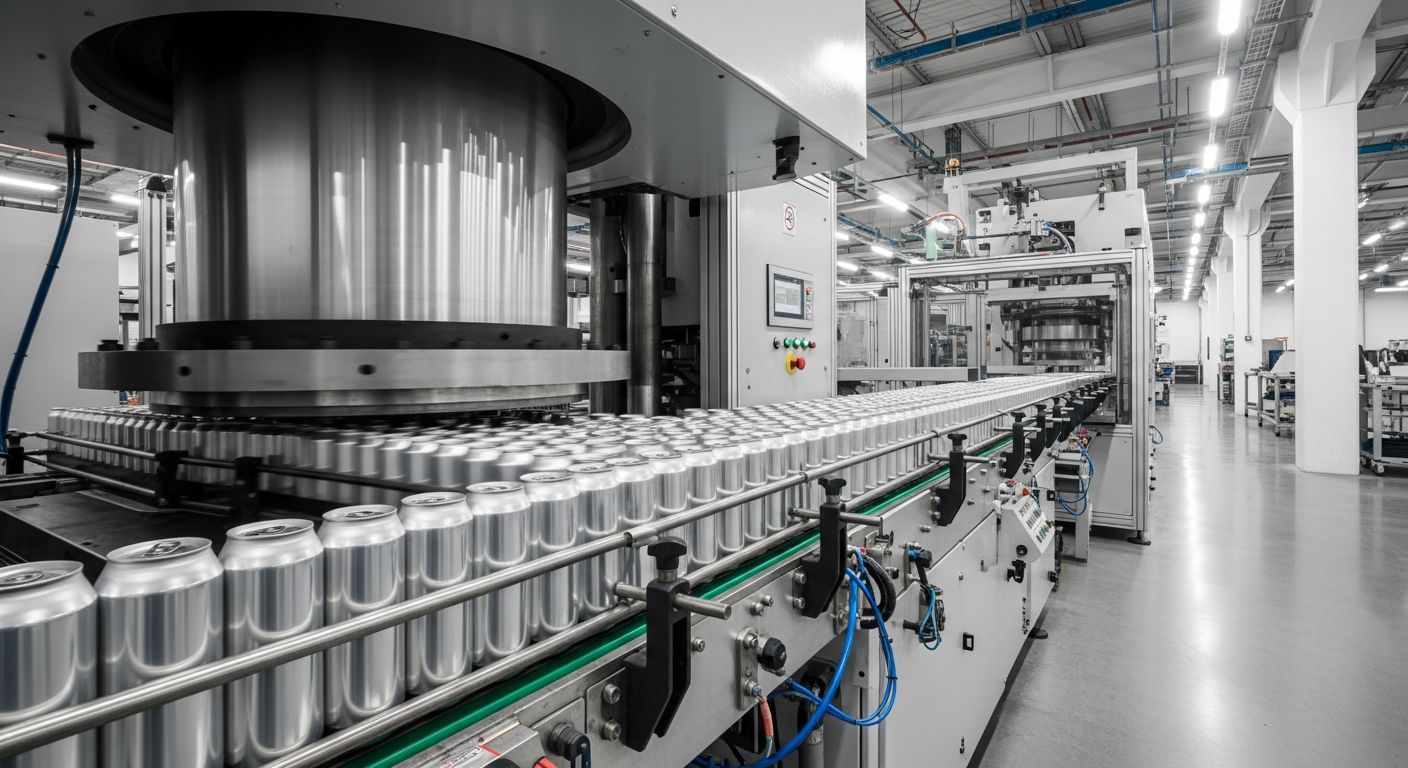
In the high-stakes world of consumer goods manufacturing, plastics processing equipment—whether thermoformers, blow molders, or injection molding machines—are the heartbeat of the facility. While many operations have basic data, too many leaders still lack real-time, actionable visibility, relying on lagging indicators rather than live signals to understand downtime. This isn't just a technology problem; it's a visibility problem. And for the plant manager focused on proactive control, visibility is the difference between hitting production targets and explaining another missed shipment to leadership.
If you are focused on increasing throughput and reducing downtime, you don't need more data for data's sake. You need a FactoryOps playbook that turns raw signals into action. This guide evaluates the best platforms for real-time visibility in 2026, specifically tailored for the unique thermal and mechanical complexities of forming machines.
Top Platforms for Real-Time Machine Monitoring in 2026
To move from reactive operations to strategic control, you need a platform that fits your operational reality. We have analyzed the top contenders based on deployment speed, compatibility with forming equipment, and ease of use for floor teams.
Guidewheel: The "FactoryOps" Solution
Guidewheel positions itself not just as software, but as a FactoryOps platform designed to democratize visibility. It is built specifically to bridge the gap between legacy machines and modern analytics without the heavy IT lift associated with traditional systems.
Core Strengths:
Universal Compatibility: Guidewheel uses non-intrusive, clip-on sensors. This means it works on any machine—from a brand-new thermoformer to a 30-year-old blow molder—without requiring PLC integration.
No Facility Internet Required: A key differentiator is that the sensors can operate independent of the facility's Wi-Fi for data collection, bypassing common IT security bottlenecks.
Rapid Deployment: Implementation is measured in days, not months.
Truthful Reporting: It provides an objective "source of truth" regarding uptime, eliminating the subjectivity of manual logs.
Limitations:
Guidewheel is built for production visibility, not deep engineering diagnostics. If you need granular PLC data for process optimization, consider pairing it with a specialized tool.
Real-World Impact:
For Hans Hartmann, Sr. Director of Manufacturing at PinnPACK Packaging, the value lies in objective data:
Guidewheel has provided us with hard data about current state vs improved state. It is truthful source of information related to uptime.
Hans Hartmann, PinnPACK Packaging via Guidewheel's Customer Research
Best For: Plant managers who need immediate visibility across a mixed fleet of equipment (old and new) and want to empower operators with a "winning" scoreboard.
MachineMetrics
MachineMetrics is a strong contender in the real-time machine monitoring space, known for its ability to capture high-frequency data directly from machine controls.
Strengths:
Deep Data Extraction: Reportedly excellent at pulling detailed parameters (like injection pressure, clamp tonnage, and barrel temperatures) from modern PLCs.
High-Frequency Analytics: Useful for very granular diagnostic work on modern equipment.
Limitations:
User feedback suggests that while powerful, it can have limitations regarding manual assembly contexts compared to other specialized tools.
Best For: Operations with highly automated, modern equipment where deep PLC data extraction is the primary requirement.
Vorne
Vorne is widely recognized for its XL Productivity Appliance—a hardware-first approach that combines a scoreboard with monitoring software.
Strengths:
Visual Management: The physical scoreboard is a powerful motivator on the factory floor.
Simplicity: It focuses heavily on OEE and count accuracy.
Limitations:
Some users express a desire for more comprehensive support resources as they navigate the feature set.
Best For: Plants that prioritize a physical "scorecard" on the line and straightforward OEE tracking.
Redzone
Redzone focuses heavily on the "people" side of manufacturing, combining productivity software with workforce collaboration tools.
Strengths:
Culture Focus: Excellent for driving operator engagement and "huddles."
Communication: Strong features for team chat and problem-solving.
Limitations:
Research indicates that some users experience technical friction with reporting reliability.
There are a few bugs in the system, especially when pulling reports.
Arthur, Software Advice
Best For: Organizations where the primary bottleneck is cultural alignment or communication rather than pure machine data acquisition.
Inductive Automation (Ignition)
Ignition by Inductive Automation is a powerful SCADA platform that offers limitless customization.
Strengths:
Customization: You can build almost anything if you have the engineering resources.
Integration: deeply integrates with MES and ERP systems.
Limitations:
It is not a "plug-and-play" solution. It requires significant time and technical expertise to build and maintain, which can be a barrier for lean teams needing quick wins and immediate visibility.
Best For: Large enterprises with dedicated controls engineering teams who want to build a bespoke system.
Specialized Predictive Maintenance Solutions (Amper, Augury, Asset Watch, Neuron Soundware, IPercept)
This group represents specialized production line analytics approaches, often focusing on specific physical inputs like vibration or current.
Amper: Uses current transformers (CTs) similar to Guidewheel to track machine cycles. It focuses on simple deployment for utilization tracking.
Augury & Asset Watch: These platforms are heavily focused on Predictive Maintenance using vibration and ultrasonic sensors. They excel at predicting bearing failures or mechanical degradation in forming machines weeks in advance.
Neuron Soundware & IPercept: These utilize advanced audio and vibration analytics (Edge AI) to detect anomalies. They are excellent for detecting subtle mechanical anomalies or air leaks that may indicate process drift, often using high-fidelity inputs.
Best For: These are often best used as complementary tools for maintenance teams specifically targeted at critical assets prone to mechanical failure, rather than as a primary FactoryOps platform for total production management.
Comparison: Selecting the Right Real-Time Monitoring Tool for Forming Machines
Platform | Primary Focus | Best For | Deployment Speed | Forming Machine Suitability |
|---|---|---|---|---|
Guidewheel | FactoryOps & Visibility | Mixed fleets (legacy + new), Rapid ROI | Fast (Days) | High (Universal clip-on sensors) |
MachineMetrics | Deep PLC Data | Modern, automated CNC/PLCs | Medium | Medium (Requires connectivity) |
Vorne | Visual OEE | Simple production counting | Medium | Medium (Hardware install) |
Redzone | Workforce/Culture | Team collaboration | Long (Culture change) | High (Process focus) |
Ignition | SCADA/Customization | Engineering-heavy customization | Long (months/years) | High (If custom built) |
Augury/Asset Watch | Predictive Maintenance | Vibration/Health monitoring | Medium | High (For maintenance only) |
From Black Box to Glass Box: The Future of Forming
For decades, managing thermoformers or blow molders was an art reliant on the "machine whisperer"—the veteran who could diagnose a process drift just by listening to the hydraulic rhythm or inspecting the flash on a part. But you cannot scale an art form. To win in 2026, you must transform the machine from a black box into a monitored asset, arming operators with real-time run status rather than intuition. This shifts the culture from fighting fires to preventing them, allowing teams to spot micro-stops and process drifts before they bleed margin.
The winners in this sector aren't necessarily buying brand-new fleets; they are the ones extracting maximum value from the assets they already have. By bridging the gap between legacy machines and modern analytics, you prove that sustainability and productivity are not opposing goals—they are the same flywheel.
Turn Forming Data into Throughput
Your forming lines already carry the story of every cycle in their electrical draw. Guidewheel analyzes the electrical draw to infer machine state and cycle counts, slowdowns, and downtime across any age of equipment, in one place.
That visibility helps operators see issues as they happen, maintenance plan work before failures, and leaders understand true capacity against AOP targets. It’s a practical way to equip the floor without a long, disruptive SCADA or rip-and-replace project.
If you want a clear, shared view of how your forming machines are really running and where to focus next, let’s take the next step together.
Book a demo with Guidewheel today.
About the Author
Lauren Dunford is the CEO and Co-Founder of Guidewheel, a FactoryOps platform that empowers factories to reach a sustainable peak of performance. A graduate of Stanford, she is a JOURNEY Fellow and World Economic Forum Tech Pioneer. Watch her TED Talk—the future isn’t just coded, it’s built.