No items found.
blog
From Paper Charts to AI in Manufacturing: How Myers Industries Paces Change That Sticks
By: Guidewheel
Updated:
March 6, 2026
5 min read
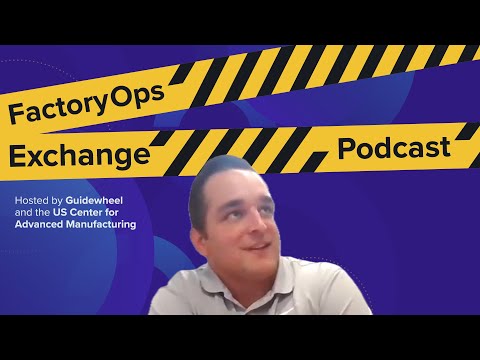
From paper charts to AI in manufacturing: how Myers Industries paces change that sticks
In this episode, Jeff McNabb (Associate Director of Supply Chain, Myers Industries) joins Lauren Dunford, CEO of Guidewheel, to discuss pacing change, aligning teams with the X Matrix, and making AI automation stick on the factory floor.
Top 5 takeaways
💡Here are the top five takeaways from Jeff McNabb's conversation on pacing change and making AI stick in manufacturing:
- Pace your rollouts like a marathon. Rushing implementation without cultural buy-in leads to failed projects. Bring every stakeholder along before accelerating.
- Use the X Matrix for goal deployment. Cascade CEO-level objectives down to the operator level with built-in accountability through bowling charts and visible grading.
- Empower frontline teams to make data-driven decisions. Remove red tape. The more people making informed calls at the lowest level, the better the business runs.
- Replace paper charts with plug-and-play technology. Digitizing machine monitoring gives you a real-time view of operations and surfaces where to make changes fast.
- Share production data with strategic supply chain partners. Giving upstream and downstream partners visibility into plant output enables faster reactions and better inventory optimization.
Best practices and key learnings
Digitize operations without disruption
Jeff's career spans Fortune 100 companies like Dow Chemical and Abbott Nutrition. When he arrived at Myers Industries, a mid-sized manufacturer of sustainable plastic and metal products, he found that much of the operations monitoring was still done on paper charts. The opportunity was clear: apply the AI technology and practices common at large corporations to a company where the low-hanging fruit had not yet been picked.
His approach was pragmatic. Rather than ripping out legacy systems, Jeff focused on plug-and-play solutions that could layer on top of existing equipment and deliver visibility fast.
"Anywhere that you can have a plug-and-play technology to digitize how you're running your machines and how well you're running your machines... you can get a very good view of the operations and where to make changes very quickly."
Jeff McNabb
This is the kind of modernization that works in the real world. No multi-year IT projects. No production downtime. Just clean data flowing from machines into the hands of people who can act on it. Jeff also stressed that master data hygiene is foundational: garbage in, garbage out. The cleaner your ERP inputs, the better your outputs and the sharper every decision becomes.
Win the change management game by pacing it right
Jeff was candid about projects that flopped early in his career. The pattern was always the same: he got excited, moved fast, and left the team behind. The cultural change required for a new process, metric, or piece of AI software never took hold because people did not understand the "why."
His framework now follows a clear sequence. First, build a well-defined project charter with explicit scope boundaries to prevent creep. Second, develop communication plans across multiple channels before launch. Third, identify your early adopters, your middle-of-the-road team members, and your laggards. Then give the laggards special attention.
"Identify your laggards... giving them the special attention to figure out how to get them on board and sometimes that's involving them directly in the project so their voice is heard and so they really help drive the buy-in."
Jeff McNabb
Converting skeptics into advocates is the single highest-leverage move in any rollout. The more people pulling in the same direction, the faster you can go and the more durable the change becomes.
✅
Effective change management in manufacturing starts with segmenting your team. Map everyone into three groups — early adopters, middle-of-the-road, and laggards — and build a tailored engagement plan for each. For laggards, the highest-leverage move is to invite them directly into the project team early: once their objections are heard and addressed, they often become your strongest advocates. Pair this with a well-defined project charter that sets explicit scope boundaries, and develop multi-channel communication plans before launch to ensure the "why" is understood at every level.
Align the entire organization from CEO to operator
One of the most actionable frameworks Jeff shared was the X Matrix, a goal deployment tool he is actively rolling out at Myers Industries. The X Matrix takes top-level strategic objectives and cascades them down through every function, every business unit, and every role, all the way to the operator on the floor.
Embedded within the framework are bowling charts that grade performance against each commitment. This creates two things that most organizations lack: visibility into what everyone is working on and accountability for execution. No one drifts off doing their own thing. Everyone marches in the same direction.
For manufacturers investing in industrial AI or AI automation, this kind of alignment is critical. Technology alone does not drive results. Technology connected to clear goals, with accountability baked in, drives results.
The secret to total organizational alignment: the X Matrix
"And it really ensures that the entire organization is fully aligned on what the goals are, even at the CEO level. And it has a very awesome way of cascading all of those goals down to each area, each function, each business, down to even the operator level."
How to put these insights into practice
Jeff's playbook is grounded in real experience, including the failures. Here is how to apply his lessons starting this week.
Start with master data, not new tools. Before layering on any AI in manufacturing solution, audit the inputs feeding your ERP. Clean data is the foundation everything else depends on. Schedule a data quality review with your planning team and identify the top five fields that drive the most downstream decisions.
Run a change management pre-mortem. Before your next rollout, map your team into three groups: early adopters, middle, and laggards. Build a specific plan for each group. For laggards, invite them into the project team early. Their objections, once addressed, become your strongest proof points.
Deploy the X Matrix for one initiative. Pick a single strategic goal and cascade it through your organization using the X Matrix framework. Attach bowling charts to track progress. This does not require new software. It requires discipline and a commitment to transparency.
Digitize one line with plug-and-play monitoring. Do not try to instrument every machine at once. Pick a bottleneck line, install sensors that require no IT involvement, and give your frontline managers real-time visibility into how that line is running. Prove the value in weeks, then expand.
Share production data with one strategic partner. Identify an upstream supplier or downstream customer who would benefit from knowing your typical plant output. Start with a simple data share, even a weekly report. Measure how it changes their responsiveness and your inventory position.
Building lasting change in manufacturing
The thread running through Jeff's entire conversation is this: technology only works when it is paired with clear goals, disciplined rollouts, and genuine respect for the people doing the work. AI automation and industrial AI are powerful, but they are tools. The real competitive advantage belongs to organizations that align every level of the business, empower frontline decision-making, and pace change so it sticks.
Mid-sized manufacturers have an outsized opportunity right now. The practices that were once exclusive to Fortune 100 companies are now accessible through plug-and-play AI technology that installs in minutes and delivers value in days. The question is not whether to modernize. It is whether you will do it in a way that brings your team along.
Book a Demo to see how Guidewheel helps manufacturers digitize operations, gain real-time visibility, and scale expertise across every plant and shift.
Watch and listen
Watch the webinar now: