No items found.
blog
Finding Hidden Downtime: Top Monitoring Tools for Grinding & Polishing Machines
By: Guidewheel
Updated:
December 18, 2025
9 min read
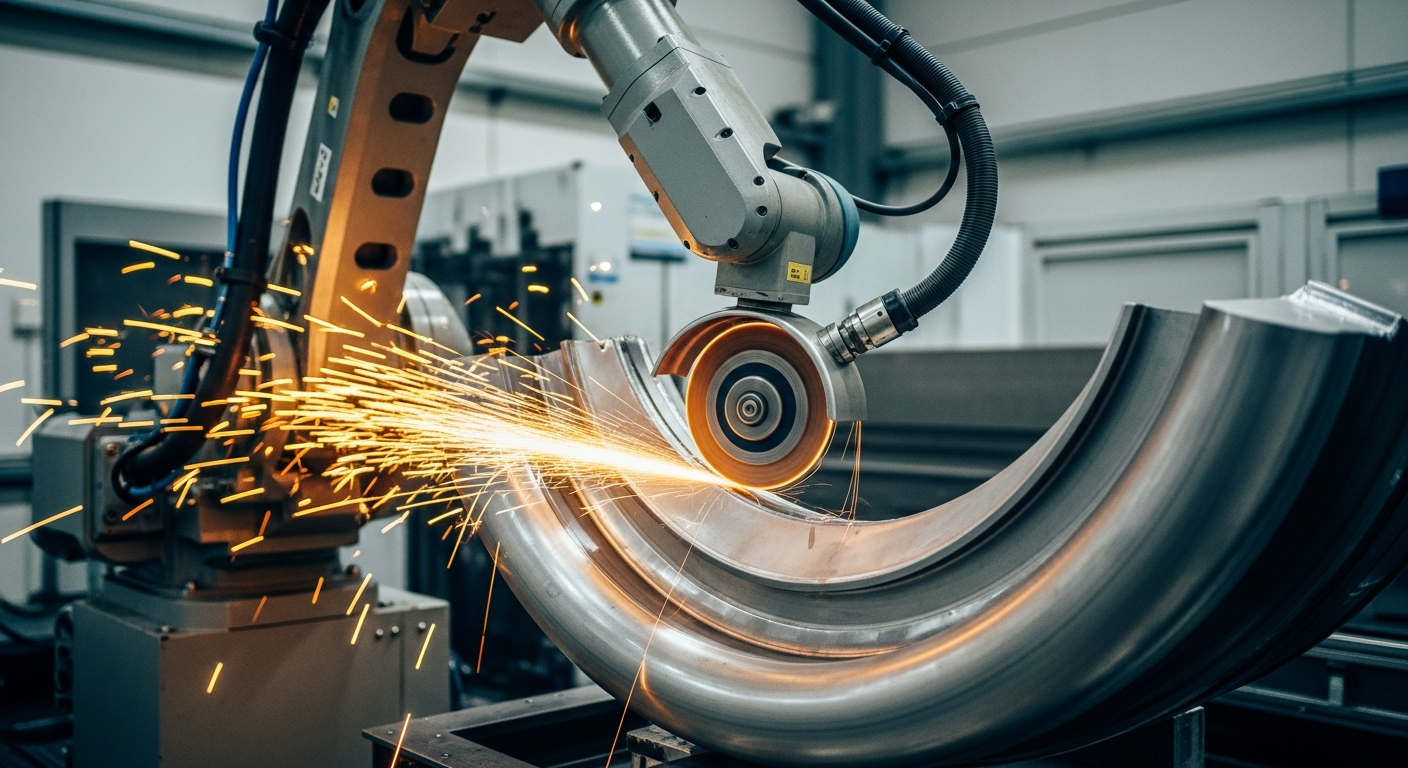
A coolant leak on Line 3 is fixed, but then the centerless grinder on Line 1 faults out. When operations are stuck in this reactive cycle, you spend the day managing interruptions rather than driving improvements. The real killer here isn't usually the catastrophic breakdown; it's the invisible inefficiency. Industry data reveals that the typical plant loses over 27 hours monthly to unplanned downtime, costing an average of $260,000 per hour for automotive OEMs (Source: Rock-and-river).
In grinding and polishing machine operations, this loss often comes from "micro-stops"—brief interruptions for wheel dressing or jams that go unrecorded. Legacy equipment is durable but often "digitally silent," leaving you flying blind until the end-of-shift report. This guide compares top grinding & polishing machine monitoring tools designed to expose these hidden losses and help you move from firefighting to high performance.
Comparative analysis of grinding & polishing machine monitoring tools
While Guidewheel offers a distinct "FactoryOps" approach, the market includes several other players, each with specific strengths depending on your facility's needs. Here is a breakdown of the top players, analyzed based on their fit for the abrasive, high-throughput steel and metals manufacturing environment.
Solution Focus | Best For... | Primary Strength | Consideration |
|---|---|---|---|
Guidewheel | Mixed Fleets / Quick Wins | Universal compatibility, fast install, operator-first | Best holistic balance of speed & depth |
MachineMetrics | Modern CNC Shops | Deep control integration | Complex for legacy/analog machines |
Vorne | Visual Factory | Simple Shop Floor Scoreboards | Hardware-centric |
Redzone | Workforce Culture | Gamification & Communication | High hardware cost & setup effort |
Inductive Automation | Engineering Teams | Unlimited Customization | Requires coding/engineering resources |
Augury/AssetWatch | Maintenance Teams | Vibration/Health Analysis | Focuses on health, not production flow |
1. Guidewheel
When you need to prove ROI quickly, you don't have six months to wait for a complex IT integration. Guidewheel is built on the philosophy that you need to verify value in weeks, not years. It functions as a "Fitbit for factories," clamping sensors around the individual phase conductors in the electrical panel (from brand-new CNCs to 1980s grinders) to read its electrical "heartbeat." Algorithms interpret that heartbeat to determine how the machine is running—run, idle, or off—so the system surfaces true production insight rather than energy data.
Why it stands out:
Universal compatibility with zero integration headaches: Guidewheel uses non-intrusive, clip-on sensors. This means you do not need to wire into the PLC or call in a team of system integrators. You can instrument a legacy polishing line in a single afternoon. Crucially, the system can use a cellular hub, so it does not require connecting to your facility's secure Wi-Fi or navigating complex IT firewall approvals.
Exposing the hidden downtime: By analyzing the power draw of the machine, Guidewheel automatically detects the difference between "running," "idling," and "off." It visualizes this timeline instantly.
With Guidewheel, we now get key metrics like production, downtime, downtime codes, scrap, and cycle time automatically and accurately. Our team no longer takes time to track manually and has been able to instead invest that time in improvements.
Edgar Yerena, COO, Custom Engineered Wheels.
Limitation to consider:
While Guidewheel excels at providing universal visibility across diverse equipment, its power-based sensing approach means it captures the operational "heartbeat" rather than integrating directly with the machine controls.
2. MachineMetrics
MachineMetrics is a robust platform known for deep integration with modern CNC controls.
Strengths:
High-fidelity CNC data: Reportedly pulls data directly from the control of modern machines, providing granular detail on tool usage and specific alarm codes.
Automated workflows: Capable of triggering logic-based actions based on specific machine states.
Limitations:
Complexity for legacy assets: While powerful for new CNCs, integrating it with older, analog grinding machines can be more complex and expensive compared to clip-on solutions.
Implementation time: Often requires a more involved setup process compared to sensor-based overlays.
3. Vorne
Vorne is widely recognized for its XL Productivity Appliance—a hardware-first solution that combines a visual scoreboard with monitoring.
Strengths:
Visual management: The large LED scoreboards provide excellent, immediate visibility on the shop floor.
Focus on OEE: It is purpose-built to calculate and display OEE metrics simply.
Limitations:
Hardware dependency: It is primarily a hardware-based solution, which can lack the flexibility of cloud-native SaaS platforms for remote management or multi-site aggregation.
4. Redzone
Redzone focuses heavily on the "social" and cultural aspects of manufacturing, using gamification to drive productivity.
Strengths:
Culture building: Excellent for driving competitive spirit and communication among workforce teams.
Compliance and quality: Strong modules for managing compliance checks and quality control steps.
Limitations:
Cost and Hardware: The system typically requires installing TVs and iPads across the facility, leading to higher upfront costs.
Initial cost is high due to tablets and tv's needed to show the live activity. Plus, the sensors needed at each point of the line.
Liz, Software Advice
Learning Curve:
There is a distinct learning curve to navigation... the upfront demands for setup and rollout exceeded expectations.
Chris E., VP of Operations, Capterra
5. Inductive Automation (Ignition)
Ignition is a SCADA platform that acts as a toolkit for building custom industrial applications.
Strengths:
Infinite customization: If you have a team of engineers, you can build exactly what you want, connecting anything to anything.
Scalability: It is an industrial standard for large-scale enterprise SCADA needs.
Limitations:
Engineering heavy: This is not a "plug-and-play" solution. It requires significant internal or external engineering resources to build and maintain the dashboards and logic.
6. Amper
Amper uses machine monitoring sensors to track machine uptime and downtime.
Strengths:
Simple installation: Uses clip-on sensors to track machine current, making it easy to deploy on legacy equipment.
Focus on utilization: Provides clear data on machine uptime and downtime.
Limitations:
Differentiation: While the hardware approach is straightforward, the broader platform is more narrowly focused on basic utilization tracking and offers fewer tools for operator engagement or continuous-improvement workflows.
7. Specialized Predictive Maintenance Tools (Augury, AssetWatch, Neuron Soundware, IPercept)
This group of competitors focuses specifically on asset health—predicting when a machine will break, rather than optimizing how it produces.
Augury & AssetWatch:
These platforms utilize advanced vibration and ultrasonic sensors to detect bearing wear, misalignment, and other mechanical faults.
Strength: deeply specialized in preventing catastrophic mechanical failure.
Limitation: They are often less focused on production throughput, OEE, or the operational "why" behind a stop (e.g., "waiting for materials").
Neuron Soundware & IPercept:
These tool monitoring systems use sound (audio analysis) and high-fidelity motion sensing to detect anomalies.
Strength: Great for grinding applications where the "sound" of the grind indicates quality or wheel wear.
Limitation: Highly niche. They tackle the "health" of the specific cut but may not provide the holistic factory visibility needed to manage flow and labor.
Transforming the Grinding & Polishing Department from Black Art to Science
For decades, grinding has been an art dependent on the intuition of veterans who know a wheel is loaded by sound alone. While that expertise is vital, it isn't scalable. To meet modern throughput demands, you must transform that art into science. This doesn't mean replacing operators; it means empowering them with the scoreboard they need to win the shift. By capturing the electrical heartbeat of your machinery, you expose the micro-stops bleeding your margins without waiting for a multi-year digital transformation. Productivity and sustainability are the same goal: every minute a surface grinder runs idle is wasted cash and carbon. The technology exists to illuminate your hidden factory in days, not years. It is time to stop flying blind and take control of your true capacity.
Turn the Lights On in Your Grinding & Polishing Operations
In grinding and polishing, the smarter path is to overlay intelligence on the machines you already trust. Guidewheel is built for mixed fleets: clip sensors onto the main power leads of any grinder or polisher—from vintage Blanchard to new CNC—and our FactoryOps platform captures true run/idle/down, cycle times, and energy use in real time. Because this bypasses complex PLC integrations and heavy IT work, your team can focus on action: spotting micro-stops as they happen, surfacing top loss drivers like wheel dressing, material handling, and changeovers, and using clear data to prioritize where to reclaim capacity across shifts and sites.
Ready to see your own hidden downtime? Book a demo with Guidewheel today.
About the Author
Lauren Dunford is the CEO and Co-Founder of Guidewheel, a FactoryOps platform that empowers factories to reach a sustainable peak of performance. A graduate of Stanford, she is a JOURNEY Fellow and World Economic Forum Tech Pioneer. Watch her TED Talk—the future isn’t just coded, it’s built.