No items found.
blog
Best Monitoring Solutions for Die Cutting Machines — OEE and Scrap Reduction for Converters
By: Guidewheel
Updated:
December 18, 2025
9 min read
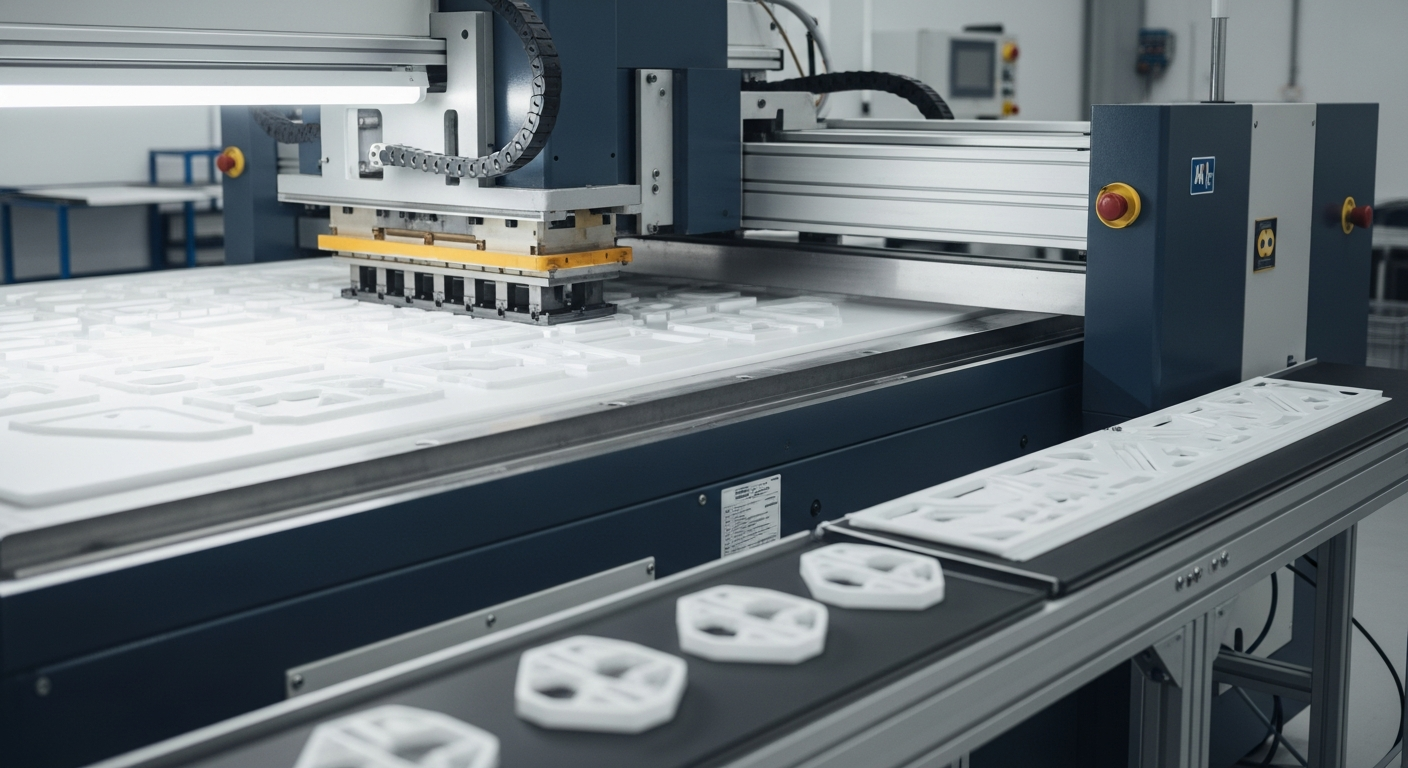
To the naked eye, the die cutting floor is humming. The presses are cycling, the web is moving, and the noise is constant. But for the plant manager, the numbers at the end of the shift tell a different story. Throughput is down. Scrap bins are fuller than they should be. And when leadership asks "Why?", the answer is buried in a stack of paper logs or lost in the memory of a shift supervisor who just clocked out.
If your team is stuck in a reactive cycle—constantly responding to jam stops, expediting late orders, and struggling to explain performance gaps—you are suffering from a real-time production visibility gap. In plastics and packaging, specifically in high-speed die cutting operations, this gap is expensive. Unexpected equipment failures can halt production at costs ranging from $500 to $5,000 per hour depending on the line's throughput and downstream dependencies.
We aren't talking about "digital transformation" buzzwords here. We are talking about the specific, practical monitoring solutions for die cutting operations—from legacy flatbeds to modern rotary lines—and how to choose the one that gets you out of reactive chaos and into proactive control.
Best Monitoring Solutions for Die Cutting Machines: Head-to-Head Comparison
When evaluating tools, the die cutting market in 2026 generally splits into three categories: FactoryOps Platforms (holistic production & machine health), Legacy Hardware (counters/HMIs), and Specialized Health Monitors (vibration only).
Here is how the major players stack up for the plant manager who needs results now.
Guidewheel: The FactoryOps Platform
Guidewheel has carved out a specific niche for plant managers who manage a mix of equipment ages and need immediate visibility without a six-month IT project.
How it works:
Guidewheel uses non-intrusive, clip-on sensors (current transformers) that clamp around the power draw of any machine—from a 30-year-old clam shell die cutter to a brand-new high-speed rotary line—and read the electrical heartbeat to know how the machine is operating. It effectively "modernizes" legacy equipment instantly.
Why it stands out for Die Cutting:
Universal Compatibility: It works on every machine type. You don't need to access the PLC or write code.
No Facility Internet Required for Dashboards: Unlike competitors that go dark when the Wi-Fi blips, Guidewheel's edge hubs process data locally. The dashboards populate on the floor regardless of internet status.
Micro-Stop Detection: It detects the specific power signature of the machine running vs. idling vs. setup. This is critical for die cutting where short stops (clearing scrap) kill OEE.
Rapid Deployment: Installation typically takes less than a week to see live data.
Limitations:
Guidewheel's approach of starting by monitoring the equipment’s electrical heartbeat provides excellent visibility into machine states and production patterns, but it doesn't capture granular process parameters like temperature, pressure, or vibration unless you add additional sensors. For operations requiring deep process control data beyond production metrics, supplementary instrumentation may be needed.
Customer Outcome:
Guidewheel has been instrumental in allowing us to see where our downtime is accumulated. We have very old equipment and have never been able to track our performances accurately. It has opened our eyes to the reparative daily maintenance issues that clearly needed to be addressed.
Sr. Process Engineer, Medium Enterprise Professional Services Company via Guidewheel's Customer Research
The Verdict: Best for plants with mixed equipment ages needing a fast, "all-in-one" view of production count, downtime, and energy.
Vorne (XL Productivity Appliance)
Vorne is a staple in the industry, known for its physical LED scoreboards that hang above production lines.
Strengths:
Visual Management: The hardware scoreboard is excellent for operator awareness.
Simplicity: It counts parts and tracks time well on single lines.
Limitations:
Vorne is hardware-centric. It can be rigid when processes get complex. For example, if you are in a changeover and a breakdown happens, tracking that nested downtime can be a struggle.
inability to capture a downtime within a changeover, then at the end of the down period, return Vorne to the same changeover event.
John E., Capterra
The Verdict: A solid choice for single-line visibility where physical scoreboards are the priority, but can lack the flexibility required for complex operational analysis.
Redzone
Redzone focuses heavily on the "people" side of manufacturing, using gamification and social-media-style communication on tablets to engage workers.
Strengths:
Culture Building: Great for huddles and operator communication.
Compliance: Good modules for safety and quality checks.
Limitations:
The interface can be rigid. In die cutting, where workflows vary significantly between jobs, this lack of customization can be frustrating for the data-savvy manager.
Tableau interfaces haven't been as user friendly as I would have expected. Redzone’s analytics is also not very customizable.
Frank M., Capterra
Additionally, users have noted interface quirks:
I wish that there could be a way to unselect options in an option list when not needed, plus it's hard to believe that Redzone doesn't have a way to include section titles in the reports that it makes.
Maxwell, Software Advice
The Verdict: Excellent for workforce engagement, but may struggle with the granular machine data flexibility needed for technical die cutting optimization.
MachineMetrics & Amper
MachineMetrics is a powerhouse for CNC and modern equipment, pulling high-frequency data directly from machine controls.
Pros: extremely deep data fidelity.
Cons: Can be overkill and expensive for older analog die cutters where deep PLC integration isn't possible or necessary.
Amper also uses an electrical monitoring approach, clamping onto a machine to sense its activity.
Pros: Simple deployment.
Cons: Often viewed as a point solution for monitoring rather than a comprehensive "FactoryOps" platform that ties teams together.
Inductive Automation (Ignition)
The "Build-It-Yourself" giant. Ignition is a SCADA platform that allows you to build anything.
Pros: Infinite customization. If you can dream it, you can build it.
Cons: Requires a dedicated SCADA engineer or expensive integrator. For the plant manager who needs to solve urgent production issues, this is a 6-12 month project, not a quick win.
The "Health" Specialists: Augury, Asset Watch, Neuron Soundware, IPercept
These companies (Augury, Asset Watch, Neuron Soundware, IPercept) focus primarily on Predictive Maintenance using vibration and acoustic sensors.
Role: They listen to bearings and motors to predict failure.
Die Cutting Context: Excellent for monitoring the main drive motor or hydraulic pumps on a large press.
Limitation: They are generally not production monitoring tools. They won't tell you your OEE, your cycle time, or why the operator stopped the machine for 5 minutes. They tell you if the machine is about to break, not how well it is running production.
Comparison Matrix: Die Cutting Monitoring Solutions Compared
Feature | Guidewheel | Vorne | Redzone | Inductive Automation | Predictive Tools (Augury/Asset Watch) |
|---|---|---|---|---|---|
Primary Focus | FactoryOps & Production Visibility | Physical Scoreboards | Workforce Engagement | SCADA / Custom Integrations | Machine Health (Vibration) |
Installation Speed | < 1 Week (Plug & Play) | Moderate (Hardware Install) | Moderate (Process Change) | Slow (Custom Engineering) | Moderate (Sensor Install) |
Legacy Compatibility | High (Universal Clip-on) | Moderate (Wired Inputs) | Low (Depends on integration) | Variable (Requires PLC/Tags) | High (Vibration Sensors) |
Internet Dependency | None (Edge Dashboards) | Low | High (Cloud/App based) | Low (Local Server) | High (Cloud Analysis) |
Complexity | Low (Operator Friendly) | Low to Moderate | Moderate | High (Engineer Required) | Moderate (Analyst Required) |
How Die Cutting Monitoring Improves Machine Performance and Reduces Waste
In the high-volume world of plastics and packaging, the difference between a profitable run and a break-even shift often comes down to micro-stops. Ten 30-second jams a shift bleed capacity, yet these losses rarely make it into paper logs. True control requires moving from lagging end-of-shift counts to leading indicators—like motor load trends that can signal mechanical binding or material feed issues before production halts.
Making the "hidden factory" visible changes the game. When you can compare the OEE and utilization rates of a 20-year-old flatbed alongside a modern rotary line, you stop guessing at root causes. Whether it is a specific material causing feed issues or a changeover dragging on, anchoring decisions in facts allows you to reclaim lost capacity and drive sustainable throughput without the capital expense of new machinery.
See Your Die Cutters Clearly, Without a Big IT Project
Guidewheel turns every flatbed or rotary cutter into a live data source by clipping a sensor on the power input. In days, operations teams get a real-time view of run / idle / down, cycle speeds, changeovers, and energy spikes—without touching the PLC or disrupting production.
That visibility makes it simple to separate true mechanical issues from material feed micro-stops, spot changeovers that drag, and catch quality or scrap risks before they spread. It’s about monitoring the process, not the people, so your team can move faster with facts.
Ready to see what your machines are actually doing?
About the Author
Lauren Dunford is the CEO and Co-Founder of Guidewheel, a FactoryOps platform that empowers factories to reach a sustainable peak of performance. A graduate of Stanford, she is a JOURNEY Fellow and World Economic Forum Tech Pioneer. Watch her TED Talk—the future isn’t just coded, it’s built.