No items found.
blog
2026 Benchmarks: Operational Performance Data for Metal Roll Forming
By: Guidewheel
Updated:
January 5, 2026
10 min read
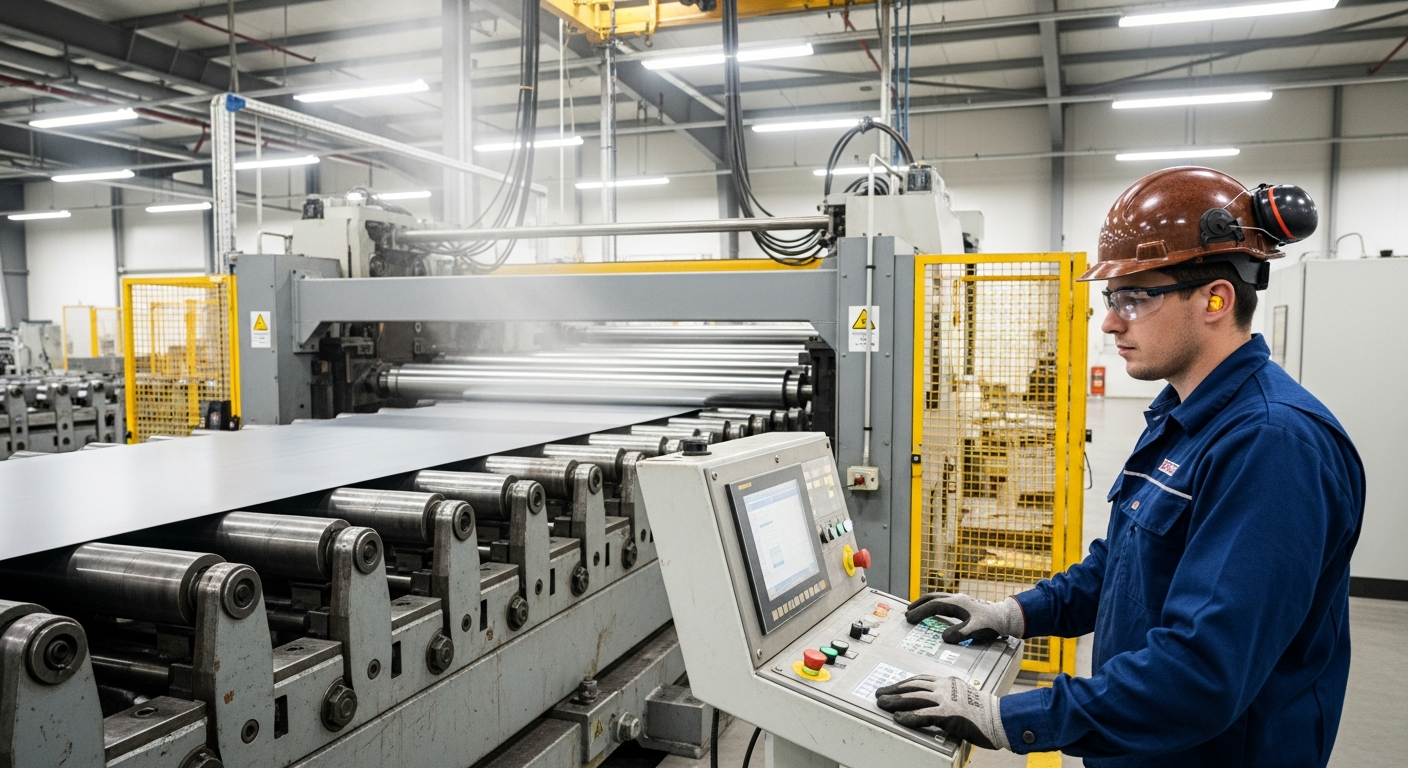
The metal roll forming industry operates under a unique set of pressures. Equipment is capital-intensive, changeovers are frequent, and the margin for error in continuous profiles is slim. For plant managers and operations directors in the steel and metals sector, the challenge isn't just keeping machines running—it's understanding why they aren't running more often.
2026 Benchmarks: Machine Monitoring System Performance for Metal Roll Forming Machines
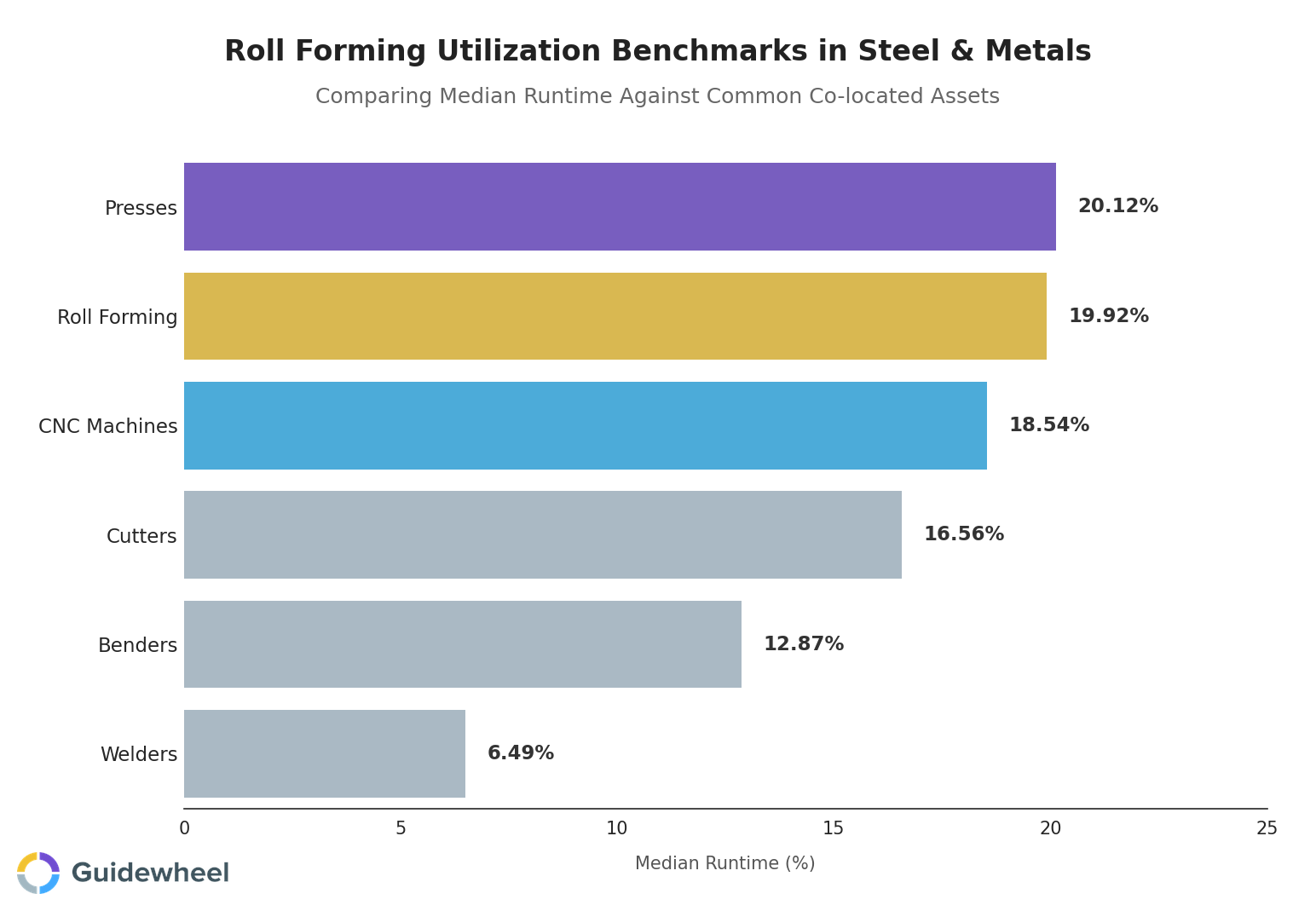
Figure 1: Utilization benchmarks for Roll Forming machines compared to other common equipment in the Steel & Metals sector. (Source: Guidewheel Performance Analysis, n=4.9 million machine-minutes)
Understanding the "No Orders" Factor
To improve performance, we must first categorize the losses. The data indicates that the single largest driver of downtime—accounting for roughly 49% of all lost time—is categorized as "No Business/Orders" (Source: Guidewheel Performance Analysis).
This suggests that for many manufacturers, the machine is available, but the production schedule does not demand it. Sure, this is a sales challenge—but for the ops team, the clock starts when an order lands. That’s where the real opportunity lies. Optimizing the time when orders are present is where monitoring systems deliver their return on investment.
Analyzing Actionable Downtime Drivers
While "No Orders" dominates the chart, the operational battle is fought in the secondary loss drivers. These are the controllable events that disrupt shifts, extend lead times, and frustrate operators. Based on the data, four specific categories represent the most significant opportunities for improvement in Steel & Metals operations.
Staffing and Operational Availability
The second-largest loss category, accounting for nearly 20% of total downtime, relates to staffing issues (Source: Guidewheel Performance Analysis). Crucially, these are not short interruptions. The average duration of a staffing-related downtime event is approximately 143 minutes—more than two hours (Source: Guidewheel Performance Analysis).
This highlights a critical challenge in modern manufacturing: the availability of skilled labor. In the context of roll forming, where setup and operation require specialized knowledge, the absence of a qualified operator stops production entirely. This data point underscores the value of remote monitoring tools that allow supervisors to support newer operators from a distance, maximizing the efficiency of the available workforce rather than expecting to fill every role instantly.
Operational Obstacles and Feed Issues
The category of "Other Operational" issues accounts for 8% of total downtime (Source: Guidewheel Performance Analysis). These events average about 47 minutes in duration and often involve feed jams, material handling delays, or start-up friction (Source: Guidewheel Performance Analysis).
For roll forming specifically, this often points to the coil changeover and threading process. Improving material handling efficiency and streamlining the "start-up" phase of a run can directly attack this 8% loss bucket.
Maintenance and Cleaning Protocols
Planned maintenance and cleaning consume roughly 8% of total downtime, with events averaging 70 minutes (Source: Guidewheel Performance Analysis). While maintenance is necessary, the variability in duration suggests opportunities for standardization.
In Steel & Metals environments, "cleaning" often involves removing metal shavings, clearing coolants, or managing scrap. If these routine tasks are not standardized, they can expand to fill available time. Benchmarking these durations against the industry average helps facility leaders determine if their maintenance windows are efficient or excessive.
Mechanical vs. Electrical Failures
A fascinating insight from the data is the contrast between mechanical and electrical failures.
Mechanical Breakdowns: Account for 7% of downtime but are resolved relatively quickly, with an average duration of 35 minutes (Source: Guidewheel Performance Analysis).
Electrical & Controls: Account for roughly 5% of downtime but result in significantly longer stoppages, averaging 123 minutes per event (Source: Guidewheel Performance Analysis).
This nearly 4x difference in repair time emphasizes the complexity of modern control systems. While mechanical fixes (like bearing lubrication or roll adjustment) are often routine, electrical faults require specialized diagnosis. This disparity validates the need for monitoring systems that can provide specific fault codes or electrical signatures to speed up the diagnosis phase of these long-duration events.
Establishing Realistic Performance Targets
Benchmarking is only useful if it accounts for operational context. A facility running high-volume, single-profile studs will naturally achieve higher OEE than a custom fabrication shop running short-run architectural profiles.
Contextualizing OEE for Roll Forming
World-class OEE in discrete manufacturing is often cited as 85%, but it's worth pausing to ask: what counts as downtime? If a line is off for hours every shift but that time isn’t tracked, the numbers look great on paper—but don't reflect reality. Benchmarking only works when we're honest about the baseline (Source: Symestic).
High-Mix / Low-Volume: For job shops with frequent profile changes, an OEE of 55-65% may represent excellent performance.
Low-Mix / High-Volume: For dedicated lines, targets should push toward the 75-80% range.
The data indicates a "utilization ceiling" of around 20% for median performers across the sector (Source: Guidewheel Performance Analysis). This serves as a sober baseline. If your facility is achieving 30% utilization, you are likely outperforming the majority of the market, provided that "No Orders" time is accounted for accurately.
The Role of Changeovers
Changeover efficiency is a defining characteristic of successful roll forming operations. In the broader machinery sector, presses and CNC machines achieve median changeover times of 8-10 minutes (Source: Guidewheel Performance Analysis).
However, roll formers often require significantly more time due to the complexity of swapping roll rafts or adjusting stands. Implementing SMED (Single Minute Exchange of Dies) principles to move internal setup tasks (while the machine is stopped) to external tasks (while the machine is running) is a proven strategy to bring roll forming changeovers closer to the 10-minute benchmark set by other asset classes (Source: Amscontrols).
Strategies for Downtime Reduction
Reducing downtime requires a shift from reactive firefighting to proactive management. The data suggests focusing on the high-duration, controllable events identified in the analysis.
Prioritizing Staffing Efficiency
With staffing issues causing 143-minute average delays, facilities must find ways to do more with the team they have (Source: Guidewheel Performance Analysis).
Remote Visibility: Giving maintenance leads and plant managers remote access to machine status allows them to guide less experienced operators through troubleshooting without physically walking to every line.
Digital SOPs: ensuring changeover and setup instructions are digitized and accessible at the machine reduces the "knowledge gap" downtime that occurs when key personnel are absent.
Addressing the Electrical Diagnosis Gap
Since electrical failures cause the longest unplanned outages (123 minutes), reducing the "time to diagnose" is critical (Source: Guidewheel Performance Analysis).
Current Monitoring: Analyzing motor current signatures can reveal stress on drive systems before they trip electrical faults.
Alert Context: Systems that capture the specific machine state immediately prior to a fault can give electricians a head start on diagnosis, potentially cutting that 2-hour average repair time significantly.
Predictive Maintenance for Mechanical Wear
While mechanical fixes are faster (35 minutes), their frequency adds up (Source: Guidewheel Performance Analysis). Bearing failures and hydraulic issues are common culprits in roll forming.
Vibration Analysis: Monitoring vibration levels on roll stands can detect bearing spalling weeks in advance, allowing the 35-minute repair to happen during a planned window rather than an urgent production run (Source: Plant Engineering).
Real-Time Monitoring: The Foundation of Optimization
The gap between median performance (20%) and top-tier performance (34%) is largely a visibility gap. You cannot optimize what you do not measure accurately. This is where modern monitoring solutions transform operations from "guessing" to "knowing."
Translating Data into Action
The benchmarks discussed—from the 20% utilization baseline to the specific duration of electrical failures—are derived from real-time sensor data. To replicate top-quartile performance, facilities need a system that captures this granularity automatically.
Guidewheel provides a distinct approach to this challenge, designed specifically for the realities of the factory floor.
Universal Compatibility: Whether you are running a brand-new duplex roll former or a legacy line from the 1980s, the system works by clipping simple current sensors onto the power supply. This bypasses the need for complex PLC integrations that often stall monitoring projects.
Focus on Controllable Downtime: By automatically detecting when a machine is idle versus down, and allowing operators to quickly categorize reasons (like "Coil Change" or "Feed Jam"), the system builds the Pareto charts needed to attack the specific operational losses identified in the data.
FactoryOps Approach: Rather than just collecting data for management, the platform is designed to empower the shop floor. "Scoreboards" give operators real-time feedback on their performance against targets, creating a natural gamification that drives efficiency.
Connectivity Flexibility: Recognizing that not all steel plants have perfect Wi-Fi, the system supports cellular connectivity, ensuring data gaps don't undermine the analysis.
By visualizing the "No Orders" time versus true operational downtime, Guidewheel helps plant managers separate sales challenges from production inefficiencies, clarifying exactly where to focus improvement efforts.
Future Trends in Steel & Metals Manufacturing
As we look toward 2026, the integration of AI and machine learning will further refine how roll forming operations are managed.
From Detection to Prediction
The industry is moving from simply tracking downtime to predicting it. As datasets grow, algorithms will become better at correlating subtle increases in motor current with impending mechanical jams or bearing failures, alerting teams before the machine stops (Source: Tech Stack).
The Connected Worker
Labor shortages are unlikely to vanish. The future of efficient operations lies in the "connected worker"—operators augmented by digital tools that provide instant access to training, remote support, and performance data. This ensures that the 143-minute staffing delays seen in the current data are drastically reduced (Source: Guidewheel Performance Analysis).
Next Steps for Operations Leaders
The data reveals a clear utilization ceiling in the industry, but it also highlights the path to breaking through it. For plant managers and operations directors, the roadmap is clear:
Baseline Your Performance: Determine if you are performing at the 20% median or the 34% top quartile.
Categorize Your Losses: Use monitoring to separate "No Orders" from actionable downtime like Staffing or Mechanical issues.
Empower Your Team: Provide the visibility tools that allow operators to own their performance and maintenance teams to diagnose issues faster.
Transform Your Production Line
Optimizing roll forming operations doesn't require a complete factory overhaul. It starts with visibility.
With the updated Scoreboard, our supervisors quickly got up to speed. We review it together, and it’s already helping day-to-day.
Michael Sanchez, Industrial Metal Supply.
Ready to see how your facility compares to the benchmarks? Even one day of visibility can change how you run your floor. Let’s show you what that looks like. Book a Demo to start your efficiency journey today.
About the Author
Lauren Dunford is the CEO and Co-Founder of Guidewheel, a FactoryOps platform that empowers factories to reach a sustainable peak of performance. A graduate of Stanford, she is a JOURNEY Fellow and World Economic Forum Tech Pioneer. Watch her TED Talk—the future isn’t just coded, it’s built.